Newfoundland and Labrador authorized wedding officiant requirements: verify before booking
Published: November 2, 2026 Last reviewed: November 2, 2026.
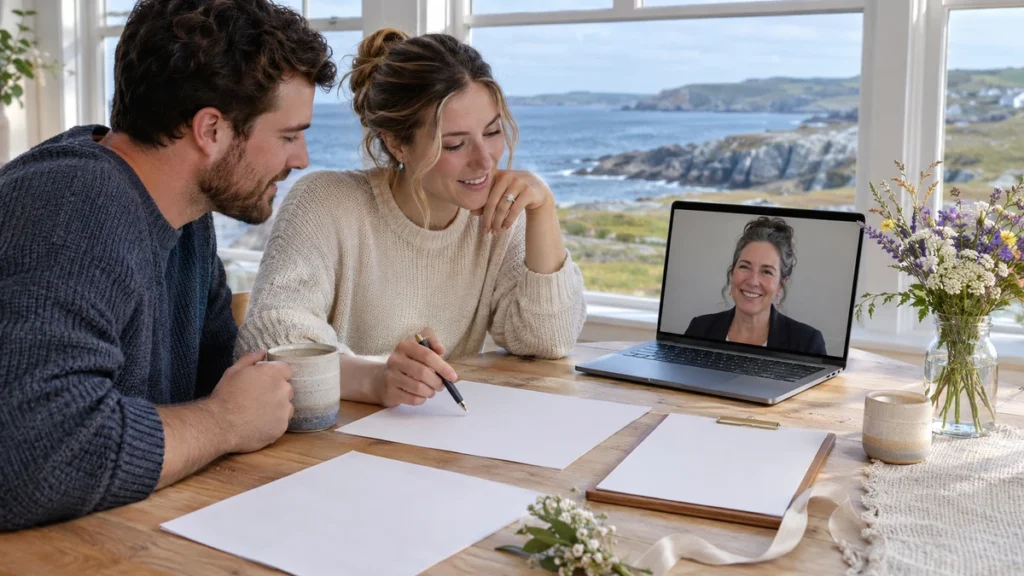
Newfoundland and Labrador authorized wedding officiant requirements should be checked before you sign a contract or send a deposit. A person may be experienced at leading ceremonies, recommended by a venue or described as a celebrant, but those details do not by themselves confirm that the person may legally solemnize your marriage in Newfoundland and Labrador.
The safest approach is to compare the officiant’s information with current Government of Newfoundland and Labrador guidance, ask which authority applies to the ceremony and keep the confirmation with your wedding records. This guide focuses on verification rather than assuming that a title, online profile or rule from another Canadian province applies in Newfoundland and Labrador.
What authorization means in Newfoundland and Labrador
For a Newfoundland and Labrador wedding, the key question is not simply whether someone can conduct a meaningful ceremony. You need to confirm whether the person is authorized for the legal marriage ceremony in the province. That is a separate planning question from whether the officiant’s style suits your vows, venue or guest list.
The Government of Newfoundland and Labrador identifies marriage commissioners and licence issuers in its official Government Services information. That page is the appropriate starting point for understanding which provincial authority and role you need to verify. The page title alone should not be treated as proof that a particular person is authorized; use it to direct your questions to the correct issuing authority.
Do not carry an assumption from another province into Newfoundland and Labrador. Authorization, terminology and administrative arrangements can vary by jurisdiction. If your officiant lives elsewhere, works across provincial borders or has previously performed ceremonies in another province, ask for confirmation specifically applicable to Newfoundland and Labrador.
- Confirm that the person may solemnize a marriage in Newfoundland and Labrador.
- Ask which official role or authority supports that authorization.
- Check that the confirmation applies to your planned ceremony rather than only to another jurisdiction.
- Keep the government contact or written confirmation with your wedding documents.
Start with the province’s official pages
Begin with the Government of Newfoundland and Labrador page titled “Marriage Commissioners & Licence Issuers – Government Services.” It is the direct official source supplied for this topic. Read the current information there, then use the contact route provided by the provincial government if the page does not answer your specific question about an officiant.
The official “Getting Married – Government Services” page is another useful starting point for the broader Newfoundland and Labrador marriage process. Use it to place the officiant question in the context of your ceremony planning, rather than relying on a vendor directory or a general Canadian article that may combine rules from different provinces.
The provincial telephone directory can help you identify the relevant government contact when you need clarification. Treat a directory entry as a way to reach the issuing authority, not as independent evidence that a private officiant is authorized. Ask the office to confirm the current requirement for your situation and record the answer clearly.
- Open the current Newfoundland and Labrador Government Services information before booking.
- Compare the officiant’s name and stated role with the official guidance.
- Use the provincial telephone directory when you need help finding the appropriate office.
- Ask the issuing authority to clarify anything that is not clear on the official page.
Separate the officiant question from the licence question
A marriage licence and an authorized officiant are connected parts of wedding planning, but they are not the same verification question. In Newfoundland and Labrador, ask who is responsible for the legal ceremony and separately ask where and how the marriage licence information must be handled. This avoids treating a licence-related title as automatic proof that the same person may solemnize the marriage.
The supplied official page uses the terms marriage commissioners and licence issuers in its title. Because those roles are named separately, ask the government contact and the officiant to explain which role applies to each part of your plan. Do not rely on a shorthand description such as “wedding officiant” without asking what legal authority it represents.
If your officiant says that the venue, a coordinator or another professional has already confirmed the arrangement, request the underlying government contact or confirmation. A venue’s planning approval can be useful for logistics, but Newfoundland and Labrador authorization should be confirmed through the appropriate provincial source.
- Ask who will perform the legal marriage ceremony.
- Ask who will handle or explain the licence-related part of the process.
- Confirm whether one person is acting in one role or more than one role.
- Do not assume that a venue or coordinator’s approval replaces provincial confirmation.
Ask for credentials or registration evidence before you sign
You do not need to make a legal judgment from an online biography. Instead, ask the prospective officiant for information that the Newfoundland and Labrador issuing authority can confirm. The goal is to create a clear link between the person you are hiring, the role they claim and the provincial authority that recognizes that role.
Ask the officiant for their full name as it appears in their professional or official records, their stated authorization or designation and the government office that can confirm it. Ask what evidence is appropriate for couples to review. The answer may be a government listing, an official confirmation or another form of record; do not assume that a particular document exists unless the issuing authority identifies it.
Confirmation should be current for the ceremony you are planning. If the officiant has changed their name, business identity, location or role, ask how the government office matches those details. Save the response and note who provided it, so you can return to the same information if your venue or ceremony plan changes.
- Full name used by the officiant in their official dealings
- Stated role or designation in Newfoundland and Labrador
- Name of the government office that can confirm the role
- Appropriate record, listing or written confirmation to retain
- Instructions for reconfirming the status if the ceremony details change
Confirm that the planned ceremony can be legally solemnized
Give the officiant and the government contact the specific facts needed to assess your plan: the ceremony location in Newfoundland and Labrador, the people getting married and the format you are considering. A response about a general service may not answer whether the particular ceremony you are planning is covered.
Ask the officiant what legal paperwork, signatures or filings each person must complete and who is responsible for explaining those steps. This is a request for current direction, not an invitation to rely on memory or on a checklist from another province. Reconfirm the answer with the issuing authority when the consequences of a misunderstanding would affect the validity of your wedding record.
If you want a highly personalized ceremony, ask which parts are ceremonial and which parts must follow the province’s legal requirements. The officiant should be able to direct you to the appropriate Newfoundland and Labrador authority for any question they cannot answer. Keep the legal portion clear in your planning notes even if the rest of the ceremony is entirely personal.
- Provide the exact Newfoundland and Labrador ceremony location.
- Ask which paperwork and signatures apply to your plan.
- Confirm who explains and submits any required material.
- Ask how a personalized ceremony can be planned around the province’s legal requirements.
Put verification into your booking plan
Before booking, make the authorization check part of your normal vendor review. Ask the officiant for written answers to the role, authority and ceremony questions, then compare those answers with the current Government of Newfoundland and Labrador information. Written communication makes it easier to spot a vague title or an answer that refers to a different province.
Your contract should identify the person providing the service and describe what the service includes. If the agreement discusses only ceremony writing, speaking or coordination, ask how the legal solemnization component is covered. If someone else is responsible for the legal portion, identify that person and verify them separately in Newfoundland and Labrador.
Tell the officiant about changes that could affect the plan, such as a different location or a change in who will conduct the ceremony. Reconfirm the authorization whenever the person, role or ceremony arrangement changes. Do not treat an earlier conversation as permanent approval for a materially different plan.
- Put the officiant’s name and stated role in your planning records.
- Record the government source or office used for confirmation.
- Describe the legal solemnization service separately from optional ceremony services.
- Reconfirm the arrangement after a change to the officiant, location or ceremony plan.
Handle uncertainty without guessing
If an officiant cannot explain which Newfoundland and Labrador authority confirms their role, pause before booking the legal service. A polished website, a referral from a friend or past work in another province is not a substitute for an answer from the appropriate provincial source.
When information conflicts, ask the officiant to identify the official source supporting their answer, then check the current Government Services pages yourself. You can also use the Government of Newfoundland and Labrador telephone directory to locate the relevant office. Ask the office to address your exact ceremony rather than a hypothetical national rule.
If you are considering a separate legal ceremony and a personal celebration, ask both the officiant and the issuing authority how that arrangement affects your paperwork and ceremony plan. Do not assume that separating the events removes the need to verify who is authorized in Newfoundland and Labrador.
- Pause if the officiant’s role cannot be confirmed.
- Ask for the official source behind any conflicting answer.
- Check Newfoundland and Labrador information rather than relying on a Canada-wide summary.
- Reconfirm the arrangement if you separate the legal ceremony from the celebration.
Final verification checklist for Newfoundland and Labrador couples
Complete the following review before you treat an officiant as confirmed. The purpose is not to collect unnecessary paperwork; it is to ensure that the person you book, the role they describe and the ceremony you plan all line up with current Newfoundland and Labrador direction.
If an answer is unavailable, ask the issuing authority what couples should verify instead. Requirements and administrative information can change, so reconfirm current details with the Government of Newfoundland and Labrador and with the authorized officiant before the ceremony.
- The person’s full name and stated role are recorded.
- The officiant has confirmed that the role applies in Newfoundland and Labrador.
- The relevant Government Services information has been reviewed.
- The appropriate government office can confirm the person’s authority.
- The ceremony location and planned format have been disclosed.
- Paperwork, signatures and responsibility for the legal portion are clear.
- Any change to the officiant or ceremony plan will trigger reconfirmation.
Continue planning
- who can officiate a wedding in Canada
- Newfoundland and Labrador marriage licence checklist
- Canadian wedding venue contract checklist
Frequently asked questions
Can a friend or family member officiate our wedding in Newfoundland and Labrador?
Do not assume that a friend or family member may legally solemnize a marriage in Newfoundland and Labrador. Ask the person which provincial authority supports their role, then confirm the answer with the Government of Newfoundland and Labrador before relying on them for the legal ceremony.
Is a marriage commissioner automatically the person who issues the marriage licence?
The official Government Services page names marriage commissioners and licence issuers, but its title does not establish that a particular person performs both roles. Ask the issuing authority and the officiant to explain which role applies to each part of your ceremony.
What credentials should we ask a Newfoundland and Labrador officiant to show?
Ask for the officiant’s full official name, stated designation, confirming government office and the type of record or confirmation that couples should use. Then verify those details with the appropriate Newfoundland and Labrador authority rather than relying only on a profile or referral.
Can an officiant from another province marry us in Newfoundland and Labrador?
Do not treat authorization in another province as proof of authorization in Newfoundland and Labrador. Ask the officiant to identify the Newfoundland and Labrador authority that confirms their role for your ceremony, and reconfirm the answer before booking.
Our venue says the officiant is approved. Is that enough?
Venue approval may address event planning, but it does not replace confirmation of provincial authorization. Use the Government of Newfoundland and Labrador information and the appropriate government contact to verify who may legally solemnize your marriage.
What should we do if the officiant’s authorization is unclear?
Pause the legal booking and ask the officiant for the government source or office that can confirm the role. Use the provincial Government Services pages or telephone directory to reach the appropriate authority, then keep the confirmation with your wedding records.
Sources and verification notes
These sources were reviewed on November 2, 2026. Requirements, prices and availability can change; confirm time-sensitive details directly.
- Marriage Commissioners & Licence Issuers – Government Services — gov.nl.ca
- Getting Married – Government Services — gov.nl.ca
- Telephone Directory | Government of Newfoundland and Labrador — telephonedirectory.gov.nl.ca
- Government of Newfoundland and Labrador — gov.nl.ca
Recent Ratings
-

Event Creation Toronto

Ontario » Scarborough ()
-
Premium Photo Booth Rental in the GTA
Ontario » Oakville ()
-
Olivia Marie Events
Ontario » Barrie ()
-

Tamea Burd Photography
British Columbia » Vancouver (Wedding Photography)
-

the barn 1906
Ontario » Bradford (Farm Weddings)
-

M2S Photography

Alberta » Edmonton (Wedding Photography)
-
The Club at North Halton
Ontario » Halton Hills (Wedding Banquet Halls)
-

Monolith Photo
Ontario » Mississauga (Wedding Photography)
Popular Listings
-

Danielle Tremblay Photography
480 viewsOntario » Windsor (Wedding Photography)
-

Alpine Ski Club
510 viewsOntario » Blue Mountains (Wedding Banquet Halls)
-

Eagle Crest Golf Course
571 viewsNova Scotia » Centreville (Wedding Banquet Halls)
-

Can’t Stop Dancing
434 viewsOntario » Barrie (Wedding DJ)
-

Bearfoot Bistro
538 viewsBritish Columbia » Whistler (Restaurant Weddings)
-

Bethesda Karen Baptist Church ( The Little White Chapel )
558 viewsBritish Columbia » Chilliwack (Wedding Banquet Halls)
-

Jennifer Armstrong Photography
606 viewsBritish Columbia » Hornby Island (Wedding Photography)
-

St Brigid’s Centre for the Arts
547 viewsOntario » Ottawa (Wedding Banquet Halls)