Who Can Legally Officiate a Wedding in Canada?
Published: July 30, 2026 Last reviewed: July 30, 2026.
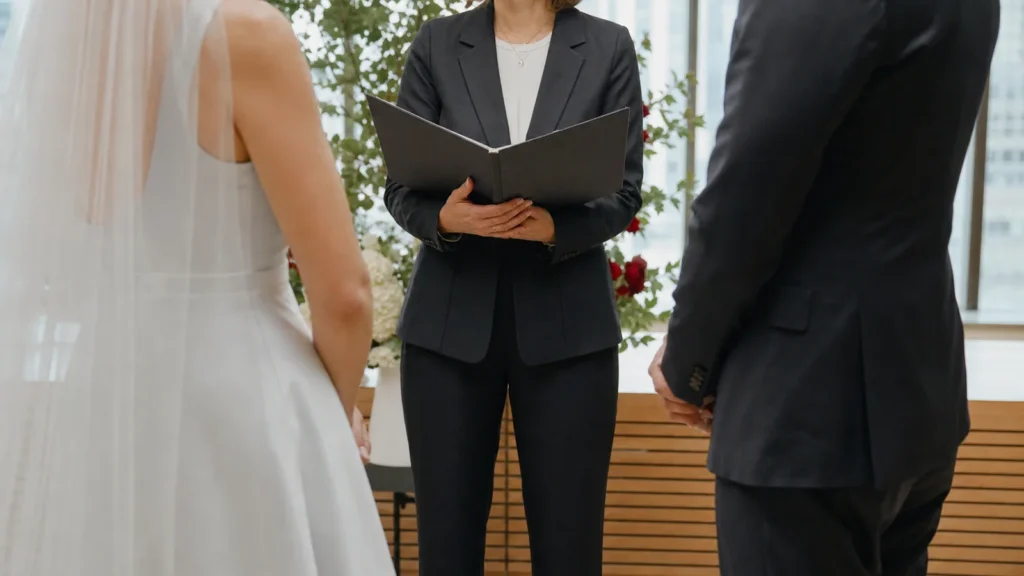
A warm ceremony is not enough to make a marriage legally valid: the person performing it must be authorized under the law of the province or territory where it occurs.
This is general planning information, not legal advice. Confirm the current rules with the issuing authority and, where necessary, a qualified professional.
The two common officiant routes
Canadian jurisdictions generally authorize registered religious representatives and civil marriage officials such as judges, clerks or marriage commissioners. Titles vary, and a person authorized in one province is not automatically authorized in another. Verify the individual—not just the organization name—against the current provincial process.
Can a friend or relative perform the ceremony?
Sometimes, but only through a formal local route. Alberta offers temporary marriage commissioner appointments for a specific day and ceremony. Applicants must meet published eligibility rules; the role is civil, cannot be used as a paid service, and high-volume periods may require eight to ten weeks. Quebec also allows a friend or relative to apply to be designated for a specific marriage. Other provinces may not offer an equivalent.
Being “ordained online” does not by itself prove Canadian authorization. Before printing invitations, ask the provincial authority whether the person is eligible, what application is required and when approval must be issued.
Questions to ask any officiant
- What is your legal authorization for our ceremony location?
- Will you handle the completed licence and registration submission?
- Which identification, witnesses and statements are required?
- What is included in the fee: rehearsal, script meetings, travel and ceremony time?
- What is the backup if you become unavailable?
- How will we confirm the registration was submitted?
Province examples
Ontario
Ontario publishes a searchable registered marriage officiants dataset. Use the current record and confirm identity directly with the officiant. Civil ceremonies may also be provided by municipalities.
British Columbia
BC marriage commissioners perform non-religious ceremonies and must be registered with Vital Statistics. The province currently publishes a base civil ceremony fee of $75 plus GST, with additional permitted costs such as travel or rehearsal discussed separately.
Alberta and Quebec
Both publish a route for a connected friend or relative, but authorization must be completed in advance. Neither route should be treated as a last-minute formality.
Red flags
Pause if the officiant will not explain their authorization, says registration is optional, wants the couple to submit documents the official process assigns to the officiant, or promises that an internet credential works “everywhere in Canada.” Ask the issuing authority before paying a non-refundable deposit.
Official sources and verification notes
Rules, fees and vendor offers can change. These sources were checked on July 30, 2026.
- Ontario registered marriage officiants
- British Columbia marriage commissioners
- Alberta temporary marriage commissioner
- Quebec authorized officiants
Recent Ratings
-

Tamea Burd Photography


British Columbia » Vancouver (Wedding Photography)
-

the barn 1906
Ontario » Bradford (Farm Weddings)
-

M2S Photography
Alberta » Edmonton (Wedding Photography)
-
The Club at North Halton
Ontario » Halton Hills (Wedding Banquet Halls)
-

Monolith Photo
Ontario » Mississauga (Wedding Photography)
-

Rebecca Elizabeth Louise Photography
Ontario » Ottawa (Wedding Photography)
-

Aneta Elizabeth Photography
Ontario » Newmarket (Wedding Photography)
-

Joel Lalonde
Ontario » Ottawa (Wedding DJ)
Popular Listings
-

Paris Jewellers
(475 views)Alberta » Edmonton (Wedding Jewellery)
-

Bearfoot Bistro
(517 views)British Columbia » Whistler (Restaurant Weddings)
-

Alice Li Alternations
(324 views)Ontario » Markham (Wedding Dresses)
-

Pam Stanley Photography
(666 views)New Brunswick » Cross Creek (Wedding Photography)
-

Halifax Wedding Chapel and Marriage Officiants
(573 views)Nova Scotia » Halifax (Wedding Officiants)
-

Dufflet Pastries
(433 views)Ontario » Toronto (Wedding Cakes)
-

Tangled Roots Venue
(564 views)Alberta » Leduc (Farm Weddings)
-

Mika Makeup
(496 views)Quebec » Beaconsfield (Wedding Makeup)