Public Park Wedding Permits in Canada: Rules and Planning Checklist
Published: August 9, 2026 Last reviewed: August 9, 2026.
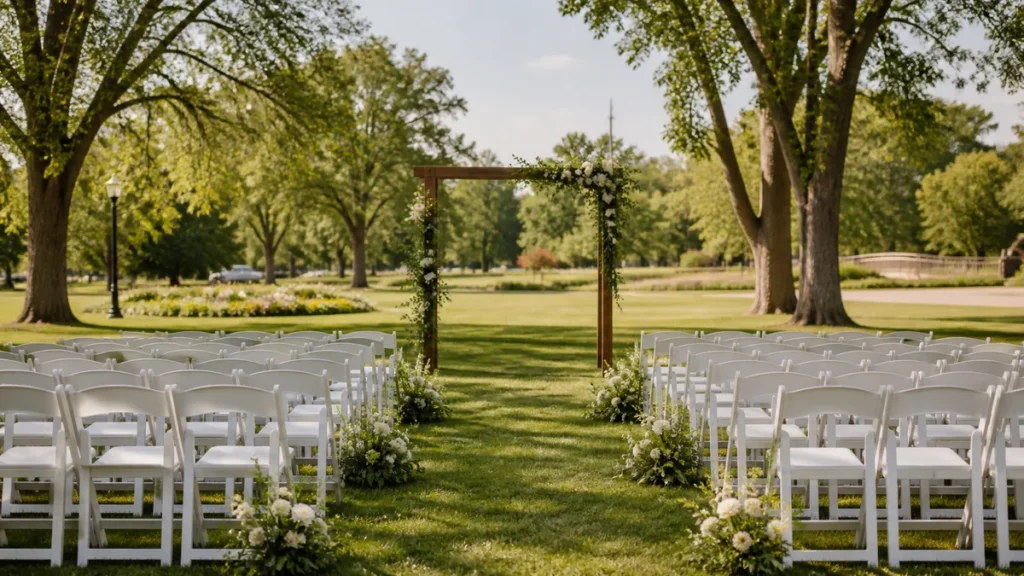
A public park can give you a beautiful ceremony setting without requiring a conventional venue, but it is not simply an open patch of grass you can claim for an afternoon. Depending on the municipality, borough or federal park, you may need a wedding permit, a general event permit or no permit at all for a very small ceremony. Restrictions can still apply even when no permit is required.
The important distinction is between permission to use the land and permission to marry. A park booking does not replace your provincial or territorial marriage licence, authorized officiant or witnesses. It also may not give you exclusive use, allow a reception or cover photography, amplified sound and alcohol.
This guide explains the practical questions to resolve before choosing a public park. Rules and fees change, so confirm every detail with the land manager and obtain written approval before paying non-refundable deposits to related vendors.
Do You Need a Permit for a Park Wedding in Canada?
There is no single Canadian park-wedding permit. The authority responsible for the land sets its own booking system and conditions. That authority could be a municipal parks department, a Montréal borough, the National Capital Commission, Parks Canada or another public agency. Start by identifying the legal land manager rather than relying on the park’s familiar name or a map listing.
The rules can differ sharply. Vancouver requires a wedding ceremony permit for its designated park wedding locations regardless of party size and asks for at least four weeks’ processing time. Calgary accepts Parks and Open Spaces applications for weddings and requires at least 30 days’ notice to reserve a location. Toronto provides formal ceremony and photography bookings, while its general park rules require permits for organized gatherings or picnics over 25 people.
A permit-free ceremony is not automatically unrestricted. Montréal’s borough-specific information illustrates the point: one listing permits a vows-only wedding without a permit but prohibits amplification and equipment, while another allows certain small private gatherings only on a first-come-first-served basis and without alcohol, amplified sound or installed equipment.
- Find the park’s official government webpage and land manager.
- Search separately for wedding, event and photography permits.
- Describe the exact guest count, setup and activities when asking for guidance.
- Treat an application as pending until written approval is issued.
What a Park Permit Actually Reserves
Ask what the permit gives you—not merely whether one exists. A permit may prevent the authority from booking another organized event in the same designated area, yet still leave the surrounding park open to walkers, cyclists, dogs, maintenance crews and other visitors. At Elk Island National Park, wedding parties receive no exclusive rights to an area and cannot displace regular visitors. Public access can also remain a condition of municipal bookings.
Confirm the precise boundaries and permitted time. Vancouver requires setup, ceremony and takedown to fit within the reserved period and does not allow couples to cordon off public access. A booking for a lawn may not include a nearby shelter, washroom, parking area or alternative rain location.
Your written confirmation should identify the date, start and finish times, site boundary, capacity and approved activities. Give copies to the planner, officiant and person supervising setup. If exclusivity or privacy is essential, a publicly accessible park may be the wrong venue even when a permit is available.
- Does the booking provide exclusive or priority use?
- Can another wedding or public event occur nearby?
- Are setup and cleanup included in the time slot?
- Is there a sheltered backup space in the booking?
Compare the Ceremony Plan with the Site’s Limits
Public parks generally work best for short, low-impact ceremonies. Before booking, send the authority a complete plan covering chairs, arches, tents, tables, power, sound, signs, floral installations, washrooms and vehicle access. Do not assume that portable or temporary equipment is exempt from review.
Vancouver prohibits amplified sound at its designated park wedding sites, although it permits suitable acoustic music. It also prohibits staking, requires tents or similar items to be weighted and limits vehicle access to grass and service roads. Calgary requests a site plan showing the position and dimensions of structures and may require a separate approval for vehicle access. Parks Canada bars shelters and general chair setups at Elk Island, apart from a few chairs for elderly or infirm guests.
Choose décor that can be carried in, secured without penetrating the ground and removed without leaving residue. Avoid fastening anything to trees, benches, fences or other public property unless the permit expressly allows it.
- Use freestanding, weighted décor rather than stakes or nails.
- Confirm whether acoustic music, a battery speaker or microphones are allowed.
- Ask whether an aisle runner, arch, signing table and reserved chairs count as structures.
- Plan a complete leave-no-trace cleanup immediately after the ceremony.
Food, Alcohol and Receptions Need Separate Answers
A ceremony permit may not authorize a cocktail hour or reception. Vancouver does not permit food distribution, food trucks or catering at its designated outdoor wedding locations. Calgary directs events involving alcohol service to a different festivals and events process with longer lead time. In Toronto, alcohol, public food service and amplified noise fall under special-event booking, while alcohol is otherwise restricted to designated areas or situations with the required authorization.
If you want champagne, passed appetizers, a catered meal or food sales, disclose that before applying. Ask about provincial liquor authorization, municipal approval, food-service rules, glass restrictions, waste removal and whether licensed servers are required. The venue’s permission and the applicable liquor authorization are separate matters.
A simple approach is to hold only the legal ceremony and portraits in the park, then move guests to a licensed reception venue. This reduces the number of park approvals and gives you dependable washrooms, power, food handling and weather protection.
- Do not open or serve alcohol until every required approval is confirmed.
- Ask whether even complimentary food counts as distribution or catering.
- Use the existing liquor-licence guide for province-specific alcohol questions.
- Check music-licensing obligations separately if recorded music will be used at the reception.
Insurance, Vendors, Photography and Drones
Liability insurance may be a condition of approval. The required coverage, additional-insured wording and submission deadline are set by the authority, not by a Canada-wide rule. Calgary makes the applicant responsible for maintaining the required insurance. Toronto notes that some park permits may also require insurance. Request the exact insurance certificate wording before buying a policy.
Photographs can have different rules from the ceremony. Vancouver allows ordinary wedding photography without a permit when there is no setup, but requires a photography permit when setup is involved. Toronto offers bookings for wedding ceremonies and commercial photography. Calgary allows casual photography at most locations but routes commercial still photography through its film team and has location-specific exceptions.
Ask each paid vendor whether they need a local business licence, separate permit or proof of insurance. Parks Canada states that businesses working in a national park—including photographers at Elk Island—need a business licence for that national park. Drone approval is another distinct issue: recreational drones are prohibited in Toronto parks, while Calgary applies site and weight-based rules alongside federal aviation requirements.
- Send the photographer the official location rules before signing the contract.
- List photography equipment and any portrait setup in the application.
- Confirm vendor licensing requirements for municipal and national park land.
- Treat drone footage as optional until written permission is secured.
Accessibility and Guest Logistics Can Decide the Location
Visit the site at the same weekday and time as the proposed ceremony. Assess the route from an accessible parking or drop-off point to the ceremony area, not just the appearance of the lawn. Gravel, steep grades, soft turf, curbs and long distances can make an otherwise attractive site unusable for guests with mobility needs.
Confirm whether accessible washrooms are open during your season and time slot. Also inspect seating, shade, cell reception, transit access and the distance emergency responders would need to cover. Toronto warns that popular destination parks can be crowded and have limited parking; Vancouver does not provide wedding parking and requires guests to use designated stalls.
Provide guests with the exact entrance, a map pin, parking instructions and a realistic walking-distance estimate. Reserve permitted chairs for anyone who cannot comfortably stand. If vehicle access is restricted, do not promise curbside ceremony access until the park authority approves the route.
- Map an accessible path from arrival point to ceremony seating.
- Verify seasonal washroom hours directly with the park.
- Assign someone to guide guests from the correct entrance.
- Avoid blocking public trails, ramps and accessible parking spaces.
Build a Weather and Site-Condition Backup Plan
A park permit does not guarantee suitable weather, air quality or ground conditions. Rain can soften turf, wind can make freestanding décor unsafe, heat may require shade and water, and wildfire smoke can make an outdoor ceremony unsuitable. Construction, maintenance or natural debris can also alter the site after you book.
Read the cancellation and refund terms before paying. Vancouver explicitly provides no refund for bad weather and treats site conditions as accepted as-is. Do not assume that another date, indoor room or nearby shelter is included. Ask what happens if the authority closes the park, as this may be treated differently from a couple choosing not to proceed.
Set an objective decision time and name the person authorized to move the ceremony. A practical backup is a properly booked indoor or covered location that can accommodate every guest, rather than an unapproved tent or gazebo added at the last minute. Share both versions of the plan with vendors and the officiant.
- Choose a weather decision deadline, such as the morning before the ceremony.
- Document who contacts guests and vendors if the location changes.
- Check the forecast, air-quality information and park alerts.
- Keep the weather contingency plan consistent with permit restrictions.
Public Park Wedding Application Checklist
Begin as soon as your date and approximate guest count are known. Published minimum lead times are not guarantees of availability: Vancouver calls for at least four weeks and Calgary at least 30 days, while complex activities can trigger longer processes. Seasonal demand, incomplete documents and additional departmental approvals can extend the timeline.
Submit a clear site plan even when it is not expressly requested. Mark the ceremony footprint, guest seating, accessible route, décor, signing table and any equipment. Include accurate arrival, setup, ceremony and removal times. If plans change after approval, ask whether the permit must be amended instead of assuming a substitution is acceptable.
Do not print invitations naming the park as confirmed until you have written approval and understand the conditions. Then align the park booking with the separate legal-marriage checklist: valid licence, authorized officiant, required witnesses and any identification or registration steps.
- Confirm the land manager, permitted site and available date.
- Provide guest count, schedule, site plan and full activity list.
- Obtain insurance, vendor licences and secondary approvals if required.
- Review public-access, sound, décor, food, alcohol, photography and drone rules.
- Confirm washrooms, accessible access, parking and cleanup arrangements.
- Carry the permit and emergency contact information on the wedding day.
Continue planning
- backyard wedding permit requirements
- Canadian wedding weather contingency plan
- wedding insurance in Canada
- wedding liquor-licence requirements
- wedding music licensing in Canada less confusingly explained as SOCAN and Re:Sound requirements at weddings subject to venue use cases respectively over music licensing obligations in Canada where applicable internally linked from the article content contextually and edited for publication to concise copy like wedding music licensing in Canada.
Frequently asked questions
Can we have a small park wedding without a permit?
Possibly, but size alone does not decide the issue. Vancouver requires a permit for designated park wedding locations regardless of party size, while some Montréal borough conditions allow limited permit-free gatherings or vows-only ceremonies. Ask the responsible land manager about your exact site, guest count, equipment and activities.
Does a park wedding permit make the marriage legal?
No. The permit controls use of the public land. You still need to meet the marriage-licence, officiant and witness requirements of the province or territory where the ceremony occurs.
Will a park permit keep the public out of the ceremony area?
Not necessarily. Some bookings provide priority use of a defined location but do not close the surrounding park. Elk Island National Park expressly provides no exclusive rights, and Vancouver does not allow access to be blocked with cordons or fencing. Confirm exclusivity in writing.
Can we put up a wedding arch or tent in a public park?
Only when the applicable rules or permit allow it. Some authorities require a dimensioned site plan, prohibit ground stakes or restrict structures entirely. Obtain written approval for the specific arch, tent, weights and installation method.
Do we need a separate permit for wedding photos?
Rules differ. Vancouver does not require one for wedding photos without setup, whereas Toronto offers formal bookings for wedding photography and Calgary applies commercial-photography and location-specific rules. The photographer may also need a business licence in a national park.
Can we serve champagne after the park ceremony?
Do not assume so. Alcohol may be prohibited, limited to designated areas or subject to municipal and provincial approvals. A basic ceremony permit may not cover service. Confirm the park’s rules and applicable liquor requirements before purchasing alcohol.
Sources and verification notes
These sources were reviewed on August 9, 2026. Requirements, prices and availability can change; confirm time-sensitive details directly.
- Outdoor wedding: Park wedding ceremony permit — City of Vancouver
- Parks & Recreation Facilities Booking — City of Toronto
- Park & Trail Rules & Etiquette — City of Toronto
- Organize a public event in your borough — Ville de Montréal
- Book a park, pathway or greenspace — City of Calgary
- Wedding ceremonies — Elk Island National Park — Parks Canada
Recent Ratings
-

Olivia Marie Events

Ontario » Barrie ()
-

Tamea Burd Photography
British Columbia » Vancouver (Wedding Photography)
-

the barn 1906
Ontario » Bradford (Farm Weddings)
-

M2S Photography

Alberta » Edmonton (Wedding Photography)
-
The Club at North Halton
Ontario » Halton Hills (Wedding Banquet Halls)
-

Monolith Photo
Ontario » Mississauga (Wedding Photography)
-

Rebecca Elizabeth Louise Photography
Ontario » Ottawa (Wedding Photography)
-

Aneta Elizabeth Photography
Ontario » Newmarket (Wedding Photography)
Popular Listings
-
Monolith Photo
538 viewsOntario » Mississauga (Wedding Photography)
-

Blue Clover Paperie
530 viewsQuebec » Laval-Ouest (Wedding Invitations)
-

The Carabine Trio
548 viewsOntario » Toronto (Wedding Music)
-

Il Barone Banquet & Conference Centre
700 viewsQuebec » Gatineau (Hotel Weddings)
-

Alice Li Alternations
329 viewsOntario » Markham (Wedding Dresses)
-

Bethesda Karen Baptist Church ( The Little White Chapel )
554 viewsBritish Columbia » Chilliwack (Wedding Banquet Halls)
-

Tangled Roots Venue
568 viewsAlberta » Leduc (Farm Weddings)
-

Sherry Smith Photography
538 viewsOntario » Brantford (Wedding Photography)