Getting Married in Canada as a Non-Resident: Documents, Licence and Recognition
Published: July 30, 2026 Last reviewed: July 30, 2026.
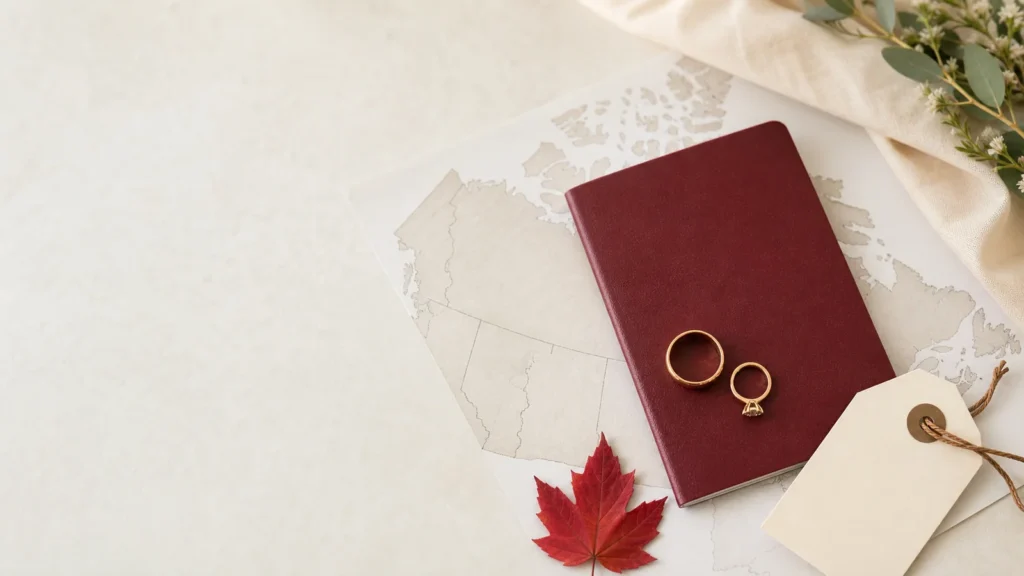
Canada has no single federal wedding-licence system. International couples must satisfy the rules where the ceremony occurs and separately confirm how the marriage will be recognized at home.
This is general planning information, not legal advice. Confirm the current rules with the issuing authority and, where necessary, a qualified professional.
Can non-residents marry in Canada?
Several provinces explicitly allow it. Alberta says there is no residency or citizenship requirement. Nova Scotia permits non-residents to apply, and Prince Edward Island says out-of-province couples follow the same process. That does not make every local step identical: identification, prior-marriage evidence, translations, appointments and officiant rules still apply.
The five-part planning test
- Eligibility: confirm age, capacity to marry and treatment of any prior marriage.
- Licence: apply in the ceremony’s province or territory within its validity window.
- Officiant: use someone authorized there, not merely authorized at home.
- Registration: ensure the officiant submits the completed documents.
- Recognition: ask the relevant authority in your home country what certificate, translation, authentication or registration it requires.
Documents to investigate early
- Valid passports and any second form of accepted ID.
- Final divorce order, annulment or death certificate from a previous marriage.
- Certified translations completed to the destination province’s standard.
- Potential letter of non-impediment or equivalent requested by a home authority.
- Entry authorization for Canada and sufficient travel-document validity.
A foreign divorce can trigger additional review. Do not book a non-refundable ceremony package until the issuing office confirms the exact document it will accept.
Timing your trip
Map office hours, appointments and physical-attendance requirements. Alberta may issue a licence the same day with no waiting period, while Manitoba requires the licence at least 24 hours before the ceremony and Quebec normally uses a 20-day publication process. A licence’s three-month validity is not permission to remain in Canada.
After the wedding
Ask when registration is likely to be complete and how to order the official certificate from abroad. Then confirm whether the certificate needs translation or authentication for your home jurisdiction. Requirements may depend on citizenship, residence and intended use—immigration, civil registration, benefits or a name update.
What a venue cannot decide
A venue may help with local logistics, but it cannot guarantee immigration entry, legal capacity, home-country recognition or the validity of an unregistered officiant. Treat government authorities and, for complex cross-border cases, qualified legal advice as the controlling sources.
Official sources and verification notes
Rules, fees and vendor offers can change. These sources were checked on July 30, 2026.
- Alberta: marriage licence eligibility
- Nova Scotia: non-resident marriage licences
- Prince Edward Island: marriage licence
- Ontario: marriage licence ID and process
Recent Ratings
-

Premium Photo Booth Rental in the GTA

Ontario » Oakville ()
-
Olivia Marie Events
Ontario » Barrie ()
-

Tamea Burd Photography
British Columbia » Vancouver (Wedding Photography)
-

the barn 1906
Ontario » Bradford (Farm Weddings)
-

M2S Photography

Alberta » Edmonton (Wedding Photography)
-
The Club at North Halton
Ontario » Halton Hills (Wedding Banquet Halls)
-

Monolith Photo
Ontario » Mississauga (Wedding Photography)
-

Rebecca Elizabeth Louise Photography
Ontario » Ottawa (Wedding Photography)
Popular Listings
-

Henkaa
453 viewsOntario » Toronto (Cocktail Dresses)
-

Tangled Roots Venue
575 viewsAlberta » Leduc (Farm Weddings)
-

Eagle Crest Golf Course
571 viewsNova Scotia » Centreville (Wedding Banquet Halls)
-

40 Knots Vineyard & Estate Winery
504 viewsBritish Columbia » Comox (Winery Weddings)
-

Robin Radke Photography
478 viewsAlberta » Edmonton (Wedding Photography)
-

Love Forever Studio
454 viewsOntario » Richmond Hill (Wedding Photography)
-

Jennifer Armstrong Photography
605 viewsBritish Columbia » Hornby Island (Wedding Photography)
-

Stone Jug
638 viewsNewfoundland and Labrador » Carbonear (Restaurant Weddings)