Can You Bring Your Own Alcohol to a Wedding Venue in Canada? BYOB Rules and Checklist
Published: August 12, 2026 Last reviewed: August 11, 2026.
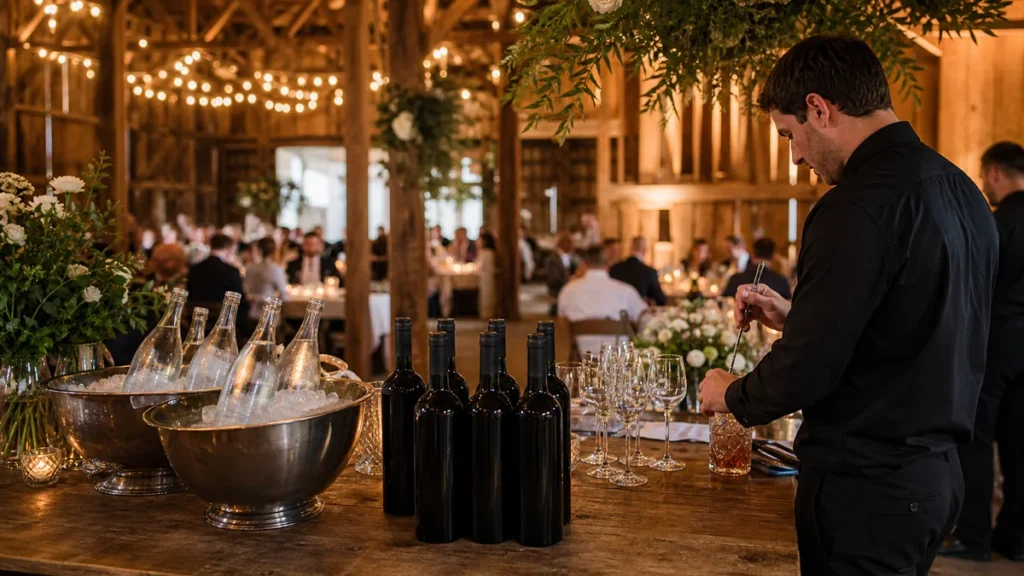
A BYOB wedding can mean two quite different things: the couple buys the alcohol and brings it to the venue, or guests bring their own drinks. Neither is automatically allowed simply because a venue does not sell a bar package. The venue’s liquor licence, its contract, the event location and the province or territory all affect the answer.
Before treating BYOB as a budget line item, get a written yes from the venue and identify who will hold any required permit. This guide focuses on the practical decision: whether a bring-your-own-alcohol format fits your Canadian wedding and what must be settled before you sign.
What “BYOB” should mean on your wedding contract
Use precise language with the venue. “Couple-supplied bar” means you purchase the alcohol, but the venue or a qualified bartender receives, stores and serves it. “Guest BYOB” means each guest may bring and consume their own alcohol. “Corkage” usually means the venue permits outside wine or alcohol for a stated fee and under stated conditions. Those arrangements have different risks, staffing needs and legal implications.
Do not assume that a venue allowing outside wine also allows beer, spirits, guests’ coolers, a self-serve bar or alcohol in getting-ready rooms. Ask for the exact permitted products, service areas and hours. A venue may also allow outside alcohol only when its own bartender serves it, only with a permit, or only for a toast.
The practical starting point is the venue contract. Our [wedding venue contract checklist](https://canadaweddingguide.com/blog/wedding-venue-contract-checklist-canada/) is useful before paying a deposit, because an email promise about BYOB is not a substitute for a signed alcohol policy.
- Couple-supplied bar: you buy; the approved service team controls service.
- Guest BYOB: guests bring their own; confirm whether that is permitted at all.
- Corkage: outside alcohol may be allowed, but fees and service rules can still apply.
- Licensed venue bar: the venue sells or supplies alcohol under its existing licence; outside alcohol may be prohibited.
Start with the venue, not the liquor store
Ask the coordinator whether the venue is already licensed for liquor and whether its licence covers your reception area, patio, tent or ceremony space. At a licensed restaurant, hotel or banquet hall, the operator may require all alcohol to be purchased through its bar program. A private room does not necessarily become a private place for liquor-law purposes.
For an unlicensed hall, barn, studio, community facility or outdoor site, determine whether the venue permits outside alcohol and whether the couple must obtain a special-event permit or licence. The person named on that permit may carry specific responsibilities, so do not let a caterer, mobile bar or venue say they will “handle it” without confirming whose name is on the approval and who is responsible on the day.
Ask the venue whether its insurance requires liquor liability coverage, whether it requires proof before access is granted and whether it mandates licensed or certified servers. Insurance, alcohol permission and a provincial permit are separate checks. For policy basics and coverage questions, see [wedding insurance in Canada](https://canadaweddingguide.com/blog/wedding-insurance-canada/).
- Is the venue already licensed, and does the licence cover every intended service space?
- May we bring alcohol ourselves? May guests bring their own?
- Who may serve it: venue staff, a mobile bar, a caterer or volunteers?
- Are self-service, shots, open bottles on tables, welcome drinks or late-night service allowed?
- What are the corkage, staffing, refrigeration, recycling, security and cleanup terms?
- Does the venue require a permit, liquor liability insurance or a site plan?
The location changes the answer
A private residence is not the same as a rented property. Several provincial regulators treat service at a home differently from service at an event venue. A farm wedding, condominium party room, short-term rental, cottage resort and backyard tent can each have a different owner policy, municipal rule or licensing status. Obtain the property owner’s written consent, even if the liquor regulator does not require a permit for a particular private-home situation.
Publicly owned or managed land adds another layer. A park, beach, civic hall or community centre may require a booking permit and may prohibit alcohol or impose location-specific conditions. A liquor approval does not replace the landowner’s approval. Couples considering a civic outdoor space should also review [public park wedding permits in Canada](https://canadaweddingguide.com/blog/public-park-wedding-permit-canada/).
If your ceremony and reception are in different places, assess each one separately. For example, a licensed hotel ballroom may not permit outside alcohol, while an off-site ceremony followed by champagne in a public park can introduce separate land-use and liquor requirements. Put the exact service location, rain location and service hours into every application and contract.
- Private home: confirm provincial rules and the homeowner’s insurance.
- Rented or commercial property: get the operator’s written alcohol policy.
- Public land: check the land manager’s event permit and alcohol conditions.
- Temporary tent or patio: confirm whether it is inside the licensed or permitted area.
- Multiple locations: do not assume one approval follows the party.
Province-aware examples: permits are not Canada-wide
Liquor rules are provincial or territorial, and local conditions can still apply. The following examples show why a national assumption is risky; they are not a substitute for checking the current regulator in the province or territory where the reception takes place.
In Ontario, the Alcohol and Gaming Commission of Ontario’s private-event Special Occasion Permit information states that an SOP is required when alcohol is sold, served or consumed outside a licensed establishment or private place. Its private-event examples include weddings, and the event must be for invited guests rather than advertised to the public. That makes the venue classification important before you plan couple-supplied or guest-supplied alcohol.
In British Columbia, the provincial government says a liquor Special Event Permit is needed for a family event, including a wedding, held in a public place. Its application guidance says to apply at least four to six weeks before the event. If the venue already has a liquor licence, use the province’s separate guidance for events at licensed establishments rather than assuming an SEP is the correct route.
In Alberta, the AGLC says a private special event licence is needed to sell or provide liquor at private events for invited guests or members. It distinguishes a private non-sale licence for alcohol provided free to guests from a private resale licence when guests pay for alcohol service or admission. Its online application also states that an event at a private residence does not need a licence, but that does not override venue, municipal or insurance requirements elsewhere in the plan.
- Ontario: determine whether the site is a licensed establishment, a private place or another location needing an SOP.
- British Columbia: a wedding in a public place can require a Special Event Permit; allow the published application lead time.
- Alberta: free host-provided alcohol and guest-paid alcohol are different private SEL categories.
- Everywhere: verify the current regulator, municipality, landowner and venue requirements for your exact site.
Special cases worth checking before you promise a bar format
Quebec is a useful example of why the details matter. The Régie des alcools, des courses et des jeux says a private event such as a wedding may not need a “permit to serve” when all listed conditions are met: it is private, has fewer than 200 participants, alcohol is free or brought by participants, and no liquor permit is being operated at the location, among other conditions. The same regulator says an application for that permit must be submitted at least 15 days before the event and recommends at least 30 days. Do not generalize that Quebec exception to another province.
In Nova Scotia, the government identifies a Class 1 Special Occasion Liquor Licence for private, invited-guest events away from a private residence where alcohol is served free of charge, and a Class 2 licence where alcohol is provided at a cost. Weddings are named as examples for both. The province says applications should be submitted at least 10 business days before the event.
A guest-paid bar is not simply a way to share costs. A cash bar, a ticketed drink arrangement, an admission charge that includes drinks and a host-provided open bar can trigger different permit categories. Decide the format before applying. If you are weighing guest experience as well as operations, read [open bar vs. cash bar at a Canadian wedding](https://canadaweddingguide.com/blog/open-bar-vs-cash-bar-wedding-canada/).
- Do not advertise an event as private if your permit category requires invited guests only.
- Do not change from host-provided to guest-paid drinks without checking the permit category again.
- Do not assume a permit for one date, room or service period covers an after-party or next-day brunch.
- For Quebec and Nova Scotia, use the regulator’s current conditions and timelines rather than a generic Canadian checklist.
Build a service plan that works in real time
Once the legal route is clear, create a one-page bar operating plan. Name the permit holder, venue contact, bar lead and person authorized to make a service decision. List the service start and end times, every approved service area, where alcohol will be stored, how staff will check identification and how unopened product will leave the site. Give the venue, caterer and planner the same final version.
A true guest-BYOB format is usually harder to operate than couple-supplied alcohol. Guests may arrive at different times, bring products that need refrigeration or try to carry drinks into unapproved areas. If the venue does permit it, establish a check-in point and communicate that only the approved service team may open, pour or move alcohol if that is the rule.
Plan non-alcoholic choices with the same care as the bar. Offer water at several points, appealing non-alcoholic drinks and enough food for the schedule. Arrange a designated-driver plan, accessible pickup point or ride option before invitations go out. A responsible service plan protects guests and prevents a late-night dispute from becoming a venue or permit problem.
- Confirm the permit holder and keep the approval available on site if required.
- Use approved servers and follow the venue’s identification and intoxication policy.
- Map bar, storage, refrigeration, glassware, ice, waste and recycling locations.
- Plan water, non-alcoholic drinks, food timing and safe rides home.
- Tell the wedding party who can authorize exceptions; do not leave bar decisions to guests.
Get the BYOB terms in writing before you book
Ask for a written alcohol addendum or a clear contract clause. It should say who buys the alcohol, who takes title to leftovers, who transports it, whether a delivery may be accepted, who provides servers and what happens if an approval is delayed or denied. It should also identify every fee rather than hiding them inside “bar setup” or “outside vendor” language.
Compare the complete operational cost, not only the bottle price. A couple-supplied bar can add corkage, bartender hours, bar rental, ice, glassware, mixers, non-alcoholic drinks, delivery, storage, licence or permit fees, insurance, security, recycling and post-event collection. Ask each provider for a written quote matched to your guest count, service duration and chosen format. Do not assume that BYOB will cost less than a venue package.
Finally, keep invitations clear and considerate. If guests may bring their own alcohol, tell them what is allowed, whether beverages will be chilled or served, and whether a cash bar or host bar will also be available. If the couple supplies alcohol, guests do not need an ambiguous “BYOB” note; simply state the bar arrangement if you want them to know.
- Written permission for outside alcohol and the exact categories permitted.
- All fees: corkage, service, outside-vendor, setup, cleanup and overtime.
- Permit or licence responsibility, application deadline and cancellation outcome.
- Server certification, staffing minimums and self-service restrictions.
- Insurance requirements and certificate deadline.
- Leftover alcohol, storage, delivery and removal responsibilities.
When a BYOB wedding is—and is not—the right fit
BYOB can suit a wedding when the venue expressly supports it, the permit path is straightforward, a responsible service team is confirmed and the couple is comfortable managing procurement and leftovers. It can also make sense when a couple wants a specific local, cultural or non-alcoholic offering that a conventional venue package does not provide.
Choose a venue-run bar or a licensed caterer when simplicity is more valuable than control. That choice can reduce coordination around storage, staffing, service areas and leftovers, although you should still review the contract’s minimum spend, service charges and closing time. The best format is the one that the site can legally and operationally support without turning the wedding day into a compliance project.
Make the decision before signing the venue agreement. If the venue will not provide its alcohol policy in writing, or cannot tell you whether outside alcohol is allowed under its licence and insurance, treat that as a reason to pause and obtain a clear answer rather than planning around an assumption.
- Good fit: written venue approval, confirmed permit route, trained service and a detailed operations plan.
- Poor fit: uncertain venue policy, multiple unapproved locations or no secure service/storage plan.
- Alternative: a venue bar, licensed restaurant or catered bar may be the lower-coordination choice.
- Next step: compare alcohol terms alongside the rest of the venue contract before paying the deposit.
Continue planning
- wedding venue contract checklist
- wedding insurance in Canada
- public park wedding permits in Canada
- open bar vs. cash bar at a Canadian wedding
- Canada wedding directory
Frequently asked questions
Can guests bring their own alcohol to a Canadian wedding venue?
Only if the venue expressly permits it and the provincial or territorial rules for that site allow it. Guest BYOB is different from the couple bringing alcohol for a hosted bar, so ask the venue to confirm the exact arrangement in writing.
Do you need a liquor permit for a wedding at home in Canada?
It depends on the province or territory and on whether alcohol is sold or simply served. Alberta and Nova Scotia, for example, identify different treatment for a private residence than for an event venue. Check the regulator where the home is located and also review municipal and insurance requirements.
Can a licensed wedding venue let us bring our own wine?
Possibly, but only if the operator’s policy and licence arrangement allow it. A licensed venue may prohibit all outside alcohol, allow only wine with corkage, or require its own staff to serve it. Get the terms, fees and service rules in the signed contract.
Is a cash bar the same as BYOB?
No. A cash bar means guests pay the bar for drinks; BYOB means the couple or guests provide alcohol from outside the venue. Provincial regulators can treat sale and free service differently, so do not switch formats after applying for a permit without confirming the rules.
How far ahead should we apply for a wedding liquor permit?
Follow the regulator’s current published lead time and build in extra time for venue documents or municipal approvals. British Columbia advises four to six weeks for a Special Event Permit, Quebec says at least 15 days and suggests 30, and Nova Scotia says at least 10 business days for its special-occasion licence.
Sources and verification notes
These sources were reviewed on August 11, 2026. Requirements, prices and availability can change; confirm time-sensitive details directly.
- Special Occasion Permits – Private Events — Alcohol and Gaming Commission of Ontario
- Determine if you need a liquor Special Event Permit — Province of British Columbia
- Apply for a liquor Special Event Permit — Province of British Columbia
- Liquor licences for private special events — Alberta Gaming, Liquor and Cannabis
- Permis de réunion « pour servir » — Régie des alcools, des courses et des jeux
- Special Occasion Liquor Licence (class 1, 2 and 3) — Government of Nova Scotia
Recent Ratings
-

Olivia Marie Events

Ontario » Barrie ()
-

Tamea Burd Photography
British Columbia » Vancouver (Wedding Photography)
-

the barn 1906
Ontario » Bradford (Farm Weddings)
-

M2S Photography

Alberta » Edmonton (Wedding Photography)
-
The Club at North Halton
Ontario » Halton Hills (Wedding Banquet Halls)
-

Monolith Photo
Ontario » Mississauga (Wedding Photography)
-

Rebecca Elizabeth Louise Photography
Ontario » Ottawa (Wedding Photography)
-

Aneta Elizabeth Photography
Ontario » Newmarket (Wedding Photography)
Popular Listings
-

The Carabine Trio
548 viewsOntario » Toronto (Wedding Music)
-

40 Knots Vineyard & Estate Winery
503 viewsBritish Columbia » Comox (Winery Weddings)
-

Katie Crane Photography
496 viewsOntario » Toronto (Wedding Photography)
-

Meg Seitz Photography
326 viewsAlberta » Calgary (Wedding Photography)
-

Membertou Trade and Convention Centre
404 viewsNova Scotia » Membertou (Wedding Banquet Halls)
-

Delta Hotels Burnaby Conference Centre
437 viewsBritish Columbia » Burnaby (Hotel Weddings)
-

ZionProduction LLC
554 viewsManitoba » Winnipeg (Wedding Videography)
-

Blue Clover Paperie
530 viewsQuebec » Laval-Ouest (Wedding Invitations)