Open Bar vs. Cash Bar at a Canadian Wedding: How to Choose
Published: August 8, 2026 Last reviewed: August 8, 2026.
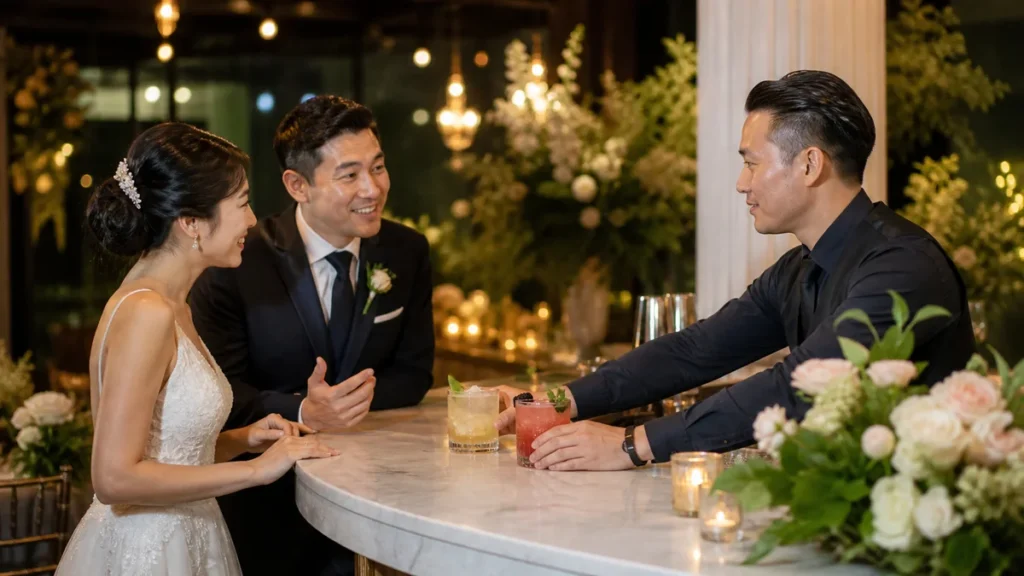
An open bar and a cash bar are not the only choices for a Canadian wedding. Couples may also encounter consumption billing, drink tickets, subsidized drinks, limited selections and hosted bars that convert to cash later in the reception. The best option depends on more than whether you can afford unlimited drinks.
Start by separating the guest experience from the venue’s billing method. Guests can experience an open bar while the couple pays for each drink consumed, or the couple can buy a fixed package that excludes certain products and service periods. Comparing the actual inclusions, risks and legal responsibilities is more useful than comparing labels alone.
Understand the five main wedding bar formats
An open bar means guests are not charged when ordering included drinks. The venue might bill the couple a fixed amount per eligible guest, by the hour or according to actual consumption. Confirm which billing method applies before treating an open-bar quote as predictable.
At a cash or no-host bar, guests pay for their drinks. A consumption or host bar usually means the couple pays for every item served rather than buying a fixed package. A limited bar restricts the included selection, while a hybrid combines hosted and guest-paid service.
- Fixed-package open bar: the couple pays an agreed rate for specified guests, products and hours.
- Consumption bar: the couple receives a bill based on drinks recorded as served.
- Cash bar: guests pay the venue or licensed bar operator directly.
- Subsidized or toonie bar: guests contribute part of the price. Although “toonie bar” traditionally suggests a two-dollar charge, state the actual price because venue terminology varies.
- Hybrid bar: examples include hosted cocktail hour followed by cash service, drink tickets followed by a cash bar, or complimentary beer and wine with guest-paid cocktails.
Compare complete quotes, not headline bar prices
There is no reliable Canada-wide price for any bar format. Venue policies, province, service duration, guest count, product selection and staffing all affect the total. Request written quotes for the same service hours and beverage list so that one option does not look cheaper simply because it includes less.
For a fixed package, multiply the quoted rate by every person the venue will charge. Ask whether children, guests below the provincial drinking age, non-drinkers, vendors and guests who leave early are excluded or priced differently. For consumption billing, build scenarios using the venue’s current menu prices and your realistic number of drinking guests. Treat the result as a planning range, not a promise.
A cash bar reduces the couple’s beverage bill, but it may still carry setup, staffing, minimum-spend, glassware or payment-terminal charges. A hybrid can control the hosted portion only if the contract clearly states the cap, how drinks are counted and what happens when the cap is reached.
- Ask whether bartenders, barbacks, security, ice, mixers, garnishes, glassware and cleanup are included.
- Check taxes, mandatory service charges, corkage, bottle-opening fees, delivery and unused-product policies.
- Confirm whether the minimum spend applies before or after taxes and service charges.
- Ask how wine poured at tables, welcome drinks, toast beverages and non-alcoholic drinks are billed.
- Find out whether a consumption tab can have a hard limit and who is authorized to increase it.
Choose according to your guests and reception structure
A fixed open-bar package offers the most predictable bill when the charged guest count and inclusions are settled. It may suit a long reception with many adult guests who are likely to use the bar. A consumption bar can be more attractive when many guests do not drink, the reception is short or substantial transportation constraints mean guests will moderate their consumption. It also creates more financial uncertainty unless the venue permits a firm cap.
A cash bar provides the strongest boundary around the couple’s spending, but shifts cost and payment friction to guests. A hybrid is often the practical middle ground: host a defined number of drinks or a defined period, then let guests purchase additional alcohol.
Review your list rather than applying a generic drinks-per-person formula. Consider the number of adults who drink, cultural or religious expectations, reception length, dinner wine, departure times, designated drivers, nearby accommodation and whether a shuttle is provided.
- Choose predictability: compare fixed packages first.
- Choose payment based on actual use: price a consumption bar with a cap.
- Choose a firm hosting limit: use drink tickets or a timed hosted period.
- Choose fewer products rather than shorter hospitality: consider hosted beer, wine and strong non-alcoholic choices.
- Choose no alcohol when it reflects your values or guests; a wedding does not require a bar.
Handle cash-bar etiquette without relying on regional stereotypes
Canadian expectations are not uniform. A cash or subsidized bar may feel familiar in one family or community and surprising in another. City, province and social circle can influence expectations, but none supplies a dependable etiquette rule. Ask a few trusted people from both sides what guests are accustomed to, then make a decision you can fund without resentment.
The avoidable etiquette problem is surprise. Guests may leave their wallet behind, arrange transportation based on expected service or feel singled out if free non-alcoholic options are poor. Communicate any guest charge before the wedding and describe what is hosted in positive, factual language.
Do not justify a cash bar by suggesting that gifts will offset the wedding or that paying will control particular guests. Your invitation is hospitality, not a transaction. A short statement about the available service and accepted payment methods is enough.
- Hosted wording: “Beer, wine, spirits and non-alcoholic drinks will be hosted throughout the reception.”
- Hybrid wording: “Cocktail hour and dinner wine are hosted. A cash bar will be available after dinner.”
- Ticket wording: “Two hosted drink tickets will be provided, followed by a cash bar.”
- Cash wording: “A cash bar accepting debit and credit will be available.”
Put the operating details in the venue or bar contract
A bar proposal should identify more than the package name. Attach the beverage list, service schedule and pricing sheet to the signed agreement. If the contract lets the venue substitute products, require an equivalent category or advance approval where availability allows.
Consumption billing needs an auditable process. Ask whether bartenders use a point-of-sale system, tokens, manual counts or opened-bottle reconciliation. Determine how spills, mistaken orders, unfinished drinks and bartender-made samples are treated. The contract should also say when you receive the itemized final bill.
For a hosted cap, name one sober decision-maker—not the couple during the reception—to receive warnings and approve changes. Specify whether service stops, converts to cash or narrows to a limited selection when the cap is reached. Guests should not discover the transition while holding an order they expected to be hosted.
- Exact opening and last-call times
- Included brands, serving sizes and excluded products
- Number of bartenders and any staffing adjustment process
- Rules for shots, doubles, table wine and signature drinks
- Guest payment methods and whether an ATM is available
- Hosted-tab warning threshold and transition procedure
- Cancellation, postponement and price-change terms
- Responsibility for permits, responsible-service certification and liquor liability insurance
Check provincial liquor rules before finalizing the format
Liquor permits and service rules are provincial or territorial, and venue licensing matters. A bar format is a financial arrangement, not proof that service is legally authorized. Ask whether the venue operates under its own licence, a caterer is responsible or the couple must obtain a special-event permit.
Rules can distinguish between giving alcohol to guests and selling it. Nova Scotia, for example, lists separate special-occasion licence classes for private weddings where alcohol is provided free and where it is sold. British Columbia requires specified responsible-service certification for events operating under a Special Event Permit. Requirements and terminology elsewhere differ, so verify the regulator for the wedding location rather than copying another province’s process.
Confirm the permit holder’s identity, required server training, permitted service area and hours, age-verification procedure, food requirements, security conditions and responsibility for purchasing alcohol. If alcohol is sold or subsidized, confirm that the proposed charge is permitted. The existing guide to wedding liquor licensing provides a useful starting point, but the regulator and permit terms control.
- Do not assume a private invitation makes an unlicensed venue exempt.
- Do not let guests bring their own alcohol unless the licence and venue expressly allow it.
- Do not promise a toonie or cash bar until the operator confirms that sales are authorized.
- Keep required permits, plans and certificates on site when the applicable rules require them.
- Recheck requirements if the venue, caterer, service area or person holding the permit changes.
Build safety and inclusion into every bar option
Charging for alcohol is not a substitute for responsible service, and an open bar does not require unlimited service to one person. Certified bartenders must retain authority to refuse service under the rules that apply to the event. Give the bar team a sober venue or family contact for problems so that the couple is not the operational decision-maker.
Canada’s Guidance on Alcohol and Health states that consuming more than two standard drinks on one occasion is associated with increased risk of harms to oneself and others. A responsible plan therefore includes appealing alcohol-free drinks, accessible water, substantial food, a firm last call and a transportation strategy.
Non-drinkers should receive more than tap water while alcoholic drinks are elaborate and hosted. Include alcohol-free beer or wine where suitable, mocktails with the same presentation standard, low-sugar choices and clearly identified ingredients. Ensure the bar route, counter and service method work for guests with mobility, sensory or communication disabilities.
- Confirm liquor liability coverage with the venue, caterer and your insurer.
- Publish shuttle times and taxi information before the reception.
- Never describe a shuttle as making overconsumption safe.
- Keep drinking water visible and available without requiring guests to queue at the main bar.
- Ensure alcohol-free choices remain available until the bar closes.
Use this final wedding bar decision checklist
Obtain comparable written proposals before choosing. Run a high and low consumption scenario, add every fixed fee, and decide the maximum amount you are willing to pay. Then assess the guest experience: what is free, what costs money, how guests pay and whether the transition between service types will be clear.
Finalize the permit holder, insurance, staffing, transportation and communication plan together. Changing one element can affect the others; for example, moving from hosted drinks to guest sales may alter the applicable permit or operating conditions in some jurisdictions.
Two weeks before the wedding, confirm the final guest categories, menu, service hours, tab authority and payment equipment. Provide the coordinator and bar lead with the same written instructions. After the event, request an itemized invoice and compare it with the agreed rates before paying the balance.
- Selected format and backup format documented
- Maximum couple-funded amount approved
- Full beverage and alcohol-free menus attached
- All fees, taxes and service charges identified
- Permit and insurance responsibilities confirmed
- Responsible bar lead and sober tab contact named
- Last call and transportation plan scheduled
- Guest-facing wording published on the wedding website
Continue planning
- wedding liquor licensing guide
- wedding venue contract checklist
- wedding insurance in Canada
- wedding vendor tipping in Canada
- accessible wedding planning checklist
Frequently asked questions
Is a cash bar rude at a Canadian wedding?
Not automatically. Expectations vary between families, communities and regions. The most important courtesy is to tell guests beforehand, state accepted payment methods and provide worthwhile alcohol-free drinks without charge.
What is the difference between an open bar and a consumption bar?
An open bar describes what guests experience: they do not pay when ordering included drinks. A consumption bar describes how the couple is billed: each served drink is charged to the host. A consumption bar can therefore feel open to guests.
What is a toonie bar?
It traditionally means guests pay two dollars per alcoholic drink while the hosts cover the remaining cost. Some venues use “subsidized bar” for similar arrangements. Confirm the actual guest price, legal authorization and payment method in writing.
Can we start with an open bar and switch to a cash bar?
Yes, if the venue permits it and the licence covers the arrangement. Set a time or financial trigger, warn guests in advance and specify exactly how the transition will be announced and handled.
Should non-drinkers be included in an open-bar package price?
That depends on the venue contract. Ask whether minors, non-drinkers, vendors and other categories can be excluded or assigned an alcohol-free package. Do not assume the venue will adjust the count automatically.
Do we need a liquor permit if the venue has a licence?
Possibly not, but confirm in writing who is legally operating the bar. Requirements depend on the province or territory, venue licence, caterer and service arrangement. A cash, hosted or hybrid label does not answer the permit question by itself.
Sources and verification notes
These sources were reviewed on August 8, 2026. Requirements, prices and availability can change; confirm time-sensitive details directly.
- Special Occasion Liquor Licence (Class 1, 2 and 3) — Government of Nova Scotia
- Prepare and Apply for a Liquor Special Event Permit — Province of British Columbia
- Types of Insurance Policies — Government of Newfoundland and Labrador
- Canada's Guidance on Alcohol and Health — Canadian Centre on Substance Use and Addiction
- Open Bar vs. Cash Bar at Your Wedding — WeddingWire Canada
Recent Ratings
-

Olivia Marie Events

Ontario » Barrie ()
-

Tamea Burd Photography
British Columbia » Vancouver (Wedding Photography)
-

the barn 1906
Ontario » Bradford (Farm Weddings)
-

M2S Photography

Alberta » Edmonton (Wedding Photography)
-

The Club at North Halton
Ontario » Halton Hills (Wedding Banquet Halls)
-

Monolith Photo
Ontario » Mississauga (Wedding Photography)
-

Rebecca Elizabeth Louise Photography
Ontario » Ottawa (Wedding Photography)
-

Aneta Elizabeth Photography
Ontario » Newmarket (Wedding Photography)
Popular Listings
-

Auberge du Vieux Port
564 viewsQuebec » Montreal (Hotel Weddings)
-

olive + piper
327 viewsBritish Columbia » Vancouver (Wedding Accessories)
-

Mika Makeup
499 viewsQuebec » Beaconsfield (Wedding Makeup)
-

Halifax Wedding Chapel and Marriage Officiants
573 viewsNova Scotia » Halifax (Wedding Officiants)
-
Iconz
350 viewsQuebec » Montreal (Wedding Entertainer)
-

Rainbow’s Roost
1,054 viewsBritish Columbia » Kamloops (Farm Weddings)
-

Paris Jewellers
476 viewsAlberta » Edmonton (Wedding Jewellery)
-

Alpine Ski Club
497 viewsOntario » Blue Mountains (Wedding Banquet Halls)