Wedding Witness Requirements in Canada: Who Can Sign?
Published: August 3, 2026 Last reviewed: August 3, 2026.
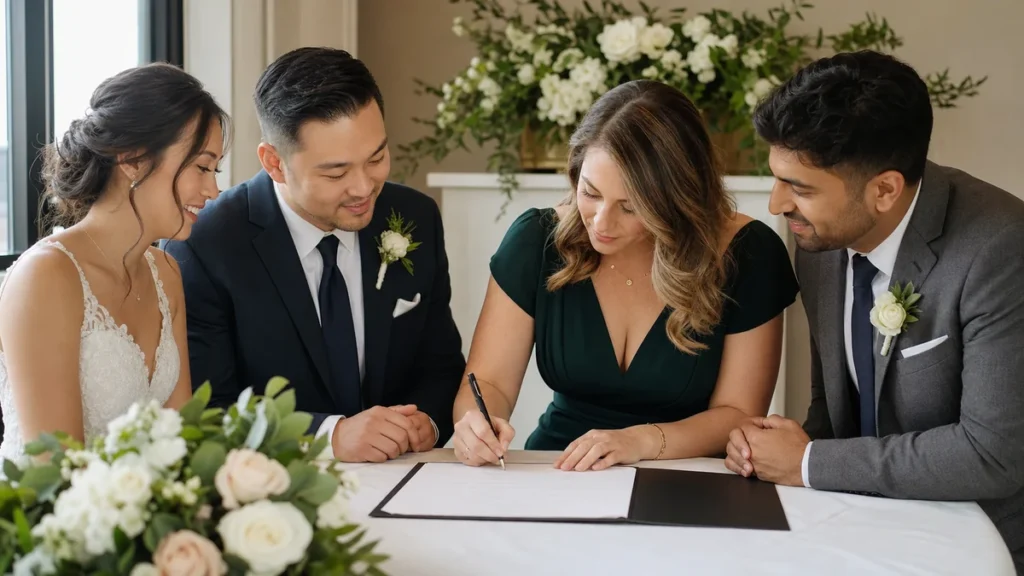
Most Canadian wedding ceremonies require two witnesses, but Canada does not have one nationwide witness-age rule. British Columbia, Alberta, Nova Scotia, Prince Edward Island, Ontario and Québec publish notably different eligibility language. The rule that matters is the rule where the ceremony takes place—not where the couple or witnesses live.
This distinction matters for elopements, ceremonies involving children and weddings where a photographer or planner will sign. Confirm the witnesses with your officiant before finalizing the ceremony plan; replacing an ineligible witness at the signing table is an avoidable wedding-day problem.
What a legal wedding witness actually does
A marriage witness is not merely an honorary attendant. The witness observes the couple give consent during the legal ceremony and signs the provincial or territorial marriage documentation. Québec describes the role explicitly: witnesses attest that consent was given and sign the declaration of marriage.
The officiant is a separate participant and ordinarily does not fill one of the two witness positions. Ontario’s official guide describes five people who must be physically present: the couple, the officiant and two witnesses. The same five-person structure appears in Alberta’s ceremony requirements.
- Attend the legal ceremony in person
- Understand that the couple is consenting to marriage
- Sign the document where directed by the officiant
- Use accurate information and a consistent signature
How many wedding witnesses do you need in Canada?
Plan for two witnesses unless the authority governing your ceremony tells you otherwise. Ontario, Alberta, British Columbia, Québec, Manitoba, Nova Scotia and Prince Edward Island all expressly require at least two. Additional guests may watch, but only the designated legal witnesses should complete the witness fields unless the officiant instructs otherwise.
Virtual attendance does not replace physical presence where in-person witnessing is required. Ontario prohibits proxy and virtual marriage ceremonies and requires the witnesses to attend and sign in person. Alberta similarly requires the couple and both witnesses to be physically present with the officiant. Guests who cannot travel may watch remotely, but they cannot serve as the legal witnesses in those provinces.
- Minimum legal group in Ontario and Alberta: five people
- The couple cannot witness their own marriage
- Do not assume a livestream participant can sign later
Wedding witness age rules differ by province
There is no safe Canada-wide minimum age to apply to every witness. Some governments publish a firm threshold, while others focus on whether the person understands the ceremony. These examples show why couples should check the jurisdiction of the wedding rather than rely on advice from another province.
Government wording can also differ from an officiant’s operational policy. Ask the officiant to approve younger witnesses in writing before printing programs or assigning the signing role.
- British Columbia: the provincial marriage-licence page says two witnesses over age 19 are required.
- Alberta: both witnesses must be adults aged 18 or older and cannot be cognitively impaired.
- Prince Edward Island: two credible adult witnesses aged 18 or older must attend.
- Nova Scotia: both witnesses must be at least 16 years old.
- Ontario: the provincial officiant guide requires two witnesses who understand what they are witnessing, without stating a numeric witness age in that guidance.
- Québec: a witness may be under 18, including the couple’s child, if the person is old enough to understand the role.
- Manitoba: the province requires at least two witnesses; confirm age and credibility expectations with the officiant or Vital Statistics.
Can family members, friends or wedding vendors be witnesses?
A parent, sibling, adult child, friend or wedding-party member can generally be considered, provided the person satisfies the applicable age, understanding and presence requirements. The witness does not need a ceremonial title such as maid of honour or best man. In Québec, the government says any person may be chosen and that the witness does not need to know the spouses well.
A photographer, videographer, planner or other vendor may also be a practical choice for a private elopement. Eligibility is only the first question, however. The vendor must agree to the responsibility, remain present for the legal portion and be available when documents are signed. Confirm that witnessing is permitted under the province’s rules and included in the vendor’s working arrangement.
- Do not assume a vendor will sign without asking
- Choose witnesses who can remain until the paperwork is complete
- Have a backup if a vendor’s schedule or staffing could change
Capacity, language and identification questions
A witness must understand what is happening. Ontario and Québec state this directly. Alberta adds detailed requirements: witnesses cannot be cognitively impaired, must understand the languages used during the ceremony and must understand the English forms they sign. Alberta also says members of the wedding party must not be under the influence of alcohol or drugs or heavily medicated.
Do not apply the identification rules for the couple automatically to witnesses. Provincial pages often list extensive ID requirements for licence applicants without saying the same documents are mandatory for ceremony witnesses. Ask the officiant whether witnesses must bring identification and how their names should appear. This is especially useful when a witness uses a chosen name, has recently changed names or does not have Canadian identification.
- Confirm the ceremony language with every witness
- Arrange an interpreter if the jurisdiction and officiant require one
- Ask whether witness ID is needed
- Record each witness’s legal name accurately if requested
How to arrange witnesses for a private elopement
A legal elopement usually cannot consist of only the couple and officiant. Start by asking the officiant whether they can help identify eligible local witnesses. Some elopement teams may offer witness coordination, but availability and any fee should be confirmed rather than assumed. Your photographer or planner may be able to sign if eligible and willing.
Avoid relying on strangers encountered at the ceremony location. A last-minute volunteer might not meet the age requirement, understand the ceremony language or stay for the full signing. This is particularly risky at remote trailheads, beaches and seasonal attractions. Designate two primary witnesses and at least one backup before travelling.
- Get each witness’s agreement in advance
- Share the arrival time and exact meeting point
- Confirm age eligibility with the officiant
- Build document signing into the photography timeline
- Keep a local backup contact for remote ceremonies
Choosing witnesses when the role has emotional significance
Legal eligibility does not settle the personal decision. Some couples choose parents or siblings because their signatures become part of the permanent registration record. Others choose friends who supported the relationship, while private elopements may use vendors to preserve secrecy. Decide whether the role is primarily sentimental, practical or both.
If selecting two people could create family tension, separate the legal role from other honours. Different relatives can give readings, accompany the couple, hold rings or sign a decorative keepsake certificate. Québec also clarifies that witnesses to a marriage notice do not have to be the same people who witness the ceremony, so couples there should not treat the earlier administrative role as automatically controlling the wedding-day choice.
- Will the person value the role?
- Can they arrive early and stay through signing?
- Will they be calm and attentive during paperwork?
- Could choosing them create an avoidable accessibility or language barrier?
Wedding-day witness checklist
Ask the officiant when and where signing will occur. It may happen during the ceremony or immediately afterward, depending on the format. Ontario requires the two witnesses to sign the marriage licence and marriage register in person. Alberta requires the couple, witnesses and officiant to sign the Registration of Marriage during the ceremony process, while Prince Edward Island requires all five participants to sign the Statement of Marriage.
The officiant normally controls and submits the registration documents. A document handed to the couple immediately after the ceremony may be a commemorative record rather than the official marriage certificate. Review the difference before the wedding so witnesses do not sign a decorative certificate while the legal document is overlooked.
- Reconfirm both witnesses several days before the ceremony
- Tell witnesses not to begin drinking before the legal signing
- Bring requested identification, if any
- Use permanent, legible signatures where directed
- Check names and fields before the officiant takes the document
- Ask who submits the completed registration
Continue planning
- province-by-province marriage licence guide
- who can legally officiate a wedding in Canada
- marriage licence and marriage certificate differences
- wedding photography timeline
Frequently asked questions
Can my child be a witness at my wedding in Canada?
It depends on the province. Québec permits a person under 18, including the couple’s child, if the child understands the role. Nova Scotia sets a minimum of 16, while Alberta and Prince Edward Island require witnesses to be at least 18. British Columbia publishes a stricter over-19 requirement. Confirm with the officiant.
Do wedding witnesses need to be Canadian citizens or residents?
The official sources reviewed focus on physical presence, age, understanding and signing rather than describing a general citizenship requirement. Do not assume this settles every jurisdiction or ceremony. Ask the officiant or provincial or territorial Vital Statistics office whether a non-resident witness needs identification or must meet another local condition.
Can our photographer sign as a wedding witness?
Potentially. A photographer may serve if they meet the province’s eligibility requirements, attend the legal ceremony, understand what they are witnessing and agree to sign. Confirm this before booking because witnessing may not be included in the photographer’s services, and a solo photographer cannot provide both required witnesses.
Can the officiant also be one of our two witnesses?
Do not plan on it. Provincial documentation treats the officiant and two witnesses as separate participants. Ontario and Alberta each describe a minimum group consisting of the couple, two witnesses and the officiant. Arrange two eligible people in addition to the authorized person performing the marriage.
Do the maid of honour and best man have to sign?
No ceremonial title automatically determines who signs. You may choose the maid of honour and best man if they qualify, but parents, siblings, friends or eligible vendors can be designated instead. Tell the officiant who the two legal witnesses are before the ceremony.
What happens if one witness is late or cannot attend?
The legal ceremony should not proceed without the required witnesses. Contact the officiant immediately and use a pre-approved backup who satisfies the local rules. A person watching online generally cannot substitute for an in-person witness where physical attendance is mandatory, and the paperwork should never be signed later as though the person attended.
Sources and verification notes
These sources were reviewed on 3 августа, 2026. Requirements, prices and availability can change; confirm time-sensitive details directly.
- Getting married — Government of Alberta
- Marriage licences — Government of British Columbia
- Witnesses to the marriage — Gouvernement du Québec
- Marriage Officiant’s Guide to Performing Marriage Ceremonies in Ontario — Government of Ontario
- Apply for a Marriage Licence — Government of Nova Scotia
- Getting a Marriage License in PEI — Government of Prince Edward Island
- Marriage and Common-Law Relationships — Government of Manitoba
- Canadian Vital Statistics – Marriage Database: Definitions and Methods — Statistics Canada
Recent Ratings
-

Tamea Burd Photography


British Columbia » Vancouver (Wedding Photography)
-

the barn 1906
Ontario » Bradford (Farm Weddings)
-

M2S Photography
Alberta » Edmonton (Wedding Photography)
-
The Club at North Halton
Ontario » Halton Hills (Wedding Banquet Halls)
-

Monolith Photo
Ontario » Mississauga (Wedding Photography)
-

Rebecca Elizabeth Louise Photography
Ontario » Ottawa (Wedding Photography)
-

Aneta Elizabeth Photography
Ontario » Newmarket (Wedding Photography)
-

Joel Lalonde
Ontario » Ottawa (Wedding DJ)
Popular Listings
-

Pam Stanley Photography
(666 views)New Brunswick » Cross Creek (Wedding Photography)
-

Henkaa
(296 views)Ontario » Toronto (Cocktail Dresses)
-

Fairmont Le Chateau Frontenac
(534 views)» Quebec (Castle Wedding)
-

Stacey Foley Design
(464 views)Alberta » Cochrane (Wedding Planning)
-

Halifax Wedding Chapel and Marriage Officiants
(573 views)Nova Scotia » Halifax (Wedding Officiants)
-

Homewood Limousines
(354 views)Ontario » Richmond Hill (Wedding Transportation)
-
Monolith Photo
(534 views)Ontario » Mississauga (Wedding Photography)
-

Danielle Tremblay Photography
(476 views)Ontario » Windsor (Wedding Photography)