Canada Wedding Weather Contingency Plan: Rain, Heat, Smoke, Snow and Cold
Published: July 30, 2026 Last reviewed: July 30, 2026.
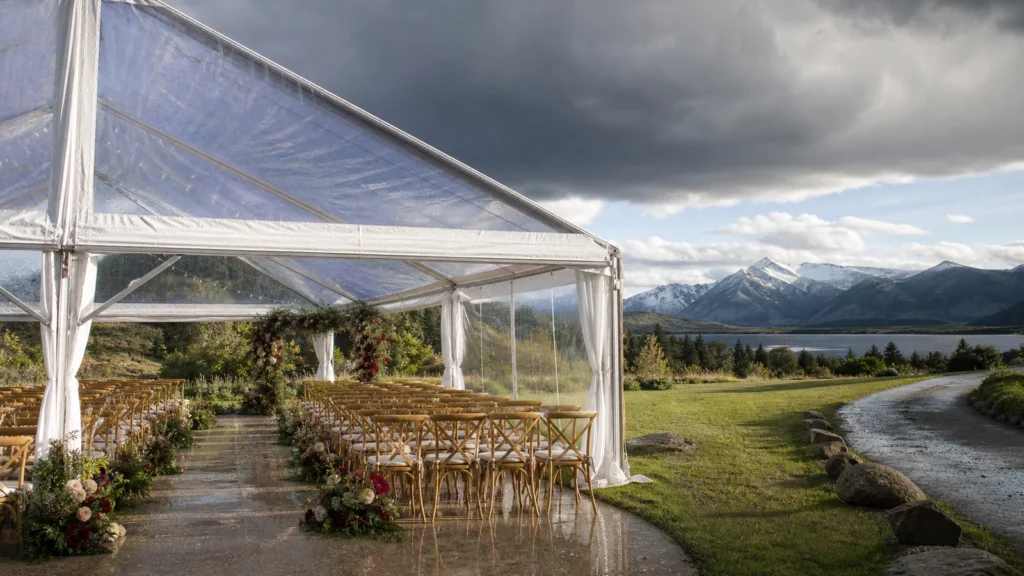
A weather plan is a decision system, not a stack of umbrellas. Assign a trigger, deadline, decision-maker and communication route before emotions and forecasts collide.
Write the plan around hazards, not seasons
- Rain and storms: lightning, wind, mud, tent drainage and power.
- Heat: shade, hydration, cooling, food safety and medication risks.
- Wildfire smoke: air quality, indoor filtration and travel disruption.
- Cold and snow: road conditions, heating, footwear and frostbite risk.
- Flood or road closure: vendor access, shuttles and alternate routes.
The one-page decision table
| Decision | Write this before the wedding |
|---|---|
| Authority | Name the venue/contact who makes the operational call and the couple’s representative who approves changes. |
| Deadline | Set the last time the ceremony can move indoors without compromising setup. |
| Trigger | Use official weather alerts, unsafe wind/lightning, air quality or venue safety policy—not a vague feeling. |
| Backup | Name the exact room or tent, capacity, layout, accessibility and added cost. |
| Message | Prewrite a guest text/email and assign who sends it. |
Use authoritative weather information
Environment and Climate Change Canada is the authoritative source for Canadian weather alerts. WeatherCAN provides official forecasts and push notifications. Use a trusted forecast for planning, but treat alerts and venue safety rules as the decision inputs.
Make the backup genuinely usable
Count chairs and accessible spaces, check washroom routes, confirm sound and power, and decide how decor moves. A “backup room” that is too small, inaccessible or occupied is not a plan. For a tent, confirm anchoring, sidewalls, flooring, heating/cooling and the conditions under which the rental company will not install or operate it.
Protect guests and vendors
Offer water and shade in heat; a warm indoor area and transport buffer in cold; and an indoor air plan when smoke is possible. Let guests disclose needs privately. Vendors also need safe working conditions, equipment protection and realistic travel time.
Contract checkpoints
- Weather relocation deadline and fee.
- Who pays for unused outdoor rentals or last-minute additions.
- Force majeure, cancellation and postponement language.
- Power outage, unsafe travel and government-order treatment.
- Insurance coverage and exclusions.
48-hour communications sequence
- Monitor official alerts and transport conditions.
- Hold the planned vendor check-in.
- Activate the written decision by the deadline.
- Notify vendors first, then guests through one consistent channel.
- Post updates only after essential people have received the direct message.
Official sources and verification notes
Rules, fees and vendor offers can change. These sources were checked on July 30, 2026.
- Environment Canada weather alerts
- WeatherCAN app
- Extreme heat warnings
- Extreme cold warnings
- Government of Canada emergency kit guidance
Recent Ratings
-

Tamea Burd Photography


British Columbia » Vancouver (Wedding Photography)
-

the barn 1906
Ontario » Bradford (Farm Weddings)
-

M2S Photography
Alberta » Edmonton (Wedding Photography)
-
The Club at North Halton
Ontario » Halton Hills (Wedding Banquet Halls)
-

Monolith Photo
Ontario » Mississauga (Wedding Photography)
-

Rebecca Elizabeth Louise Photography
Ontario » Ottawa (Wedding Photography)
-

Aneta Elizabeth Photography
Ontario » Newmarket (Wedding Photography)
-

Joel Lalonde
Ontario » Ottawa (Wedding DJ)
Popular Listings
-

Adam See Photography
(549 views)Ontario » Barrie (Wedding Photography)
-

Homewood Limousines
(356 views)Ontario » Richmond Hill (Wedding Transportation)
-

Bearfoot Bistro
(517 views)British Columbia » Whistler (Restaurant Weddings)
-

Bethesda Karen Baptist Church ( The Little White Chapel )
(551 views)British Columbia » Chilliwack (Wedding Banquet Halls)
-

Membertou Trade and Convention Centre
(397 views)Nova Scotia » Membertou (Wedding Banquet Halls)
-

St Brigid’s Centre for the Arts
(512 views)Ontario » Ottawa (Wedding Banquet Halls)
-

Sherry Smith Photography
(532 views)Ontario » Brantford (Wedding Photography)
-

Bar U Ranch
(574 views)Alberta » Longview (Farm Weddings)