Wedding Venue Contract Checklist for Canadian Couples
Published: July 30, 2026 Last reviewed: July 30, 2026.

The safest venue comparison is not “price per person.” It is the total obligation, the exact space and service promised, and what happens if plans change.
This is general planning information, not legal advice. Confirm the current rules with the issuing authority and, where necessary, a qualified professional.
1. Identify exactly what you are booking
- Legal business name, venue address and contracting party.
- Event date, start/end time, access for setup and deadline for teardown.
- Named rooms, outdoor areas, capacity and exclusive-use boundaries.
- Included furniture, staffing, linens, power, parking, cleaning and security.
- Rehearsal access and storage before or after the event.
2. Reconstruct the total price
Ask for a sample invoice showing rental, minimum spend, food and beverage, staffing, SOCAN/Re:Sound or other music-related charges if applicable, service charge, gratuity, tax, corkage, cake cutting, overtime, rentals, security and damage deposit. Confirm whether a “service charge” is distributed as gratuity or retained by the venue.
3. Mark every payment deadline
The agreement should distinguish a deposit, retainer, damage deposit and instalment. Note whether each amount is refundable, credited to the final bill or forfeited. In Ontario, many consumer agreements over $50 must be in writing, but a cooling-off period does not apply to every contract. Never rely on a verbal promise to “work something out.”
4. Read cancellation and rescheduling together
- Who may cancel and on what notice?
- What money is retained at each date milestone?
- May the couple transfer the booking to a replacement date or person?
- What happens if the venue cannot perform?
- Does force majeure postpone, credit or terminate the agreement?
- Who decides that weather or safety conditions trigger the backup plan?
5. Lock down operational restrictions
Confirm approved-vendor rules, load-in route, candles, confetti, wall attachments, sound limits, last call, alcohol service, permits, insurance limits, child supervision and accessibility. If an essential promise—step-free access, a private ceremony room or a late curfew—is not written, it is difficult to enforce later.
6. Create a weather and interruption clause
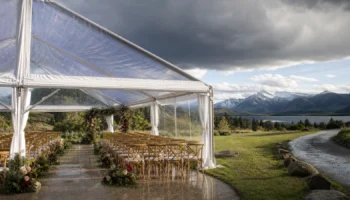
For an outdoor wedding, name the indoor backup space, its capacity, the decision deadline, setup cost and decision-maker. Ask how smoke, extreme heat, power loss, road closure and government restrictions are handled—not just rain.
7. Review the legal boilerplate
Notice requirements, indemnity, limitation of liability, insurance, dispute process, governing law, assignment, amendment and entire-agreement clauses can materially change the practical deal. A high-value or unusual agreement may justify review by a lawyer licensed in the relevant province.
Before you sign
- Compare the contract with the proposal and tour notes.
- Put every negotiated change into the signed document.
- Initial amendments and obtain a complete countersigned copy.
- Save emails, receipts and the version in effect on the signing date.
- Calendar all notice, payment, guest-count and menu deadlines.
Still comparing options? Browse the Canada Wedding Guide wedding venue directory, then verify every offer directly with the venue.
Official sources and verification notes
Rules, fees and vendor offers can change. These sources were checked on July 30, 2026.
Recent Ratings
-

M2S Photography


Alberta » Edmonton (Wedding Photography)
-
The Club at North Halton
Ontario » Halton Hills (Wedding Banquet Halls)
-

Monolith Photo
Ontario » Mississauga (Wedding Photography)
-

Rebecca Elizabeth Louise Photography
Ontario » Ottawa (Wedding Photography)
-

Aneta Elizabeth Photography
Ontario » Newmarket (Wedding Photography)
-

Joel Lalonde
Ontario » Ottawa (Wedding DJ)
-

Seanna Kreager Photography
Ontario » Ottawa (Wedding Photography)
-

Knotted Nuptials
Ontario » Sudbury (Wedding Officiants)
Popular Listings
-

Jennifer Armstrong Photography
(590 views)British Columbia » Hornby Island (Wedding Photography)
-

40 Knots Vineyard & Estate Winery
(491 views)British Columbia » Comox (Winery Weddings)
-

Eagle Crest Golf Course
(554 views)Nova Scotia » Centreville (Wedding Banquet Halls)
-

Dufflet Pastries
(428 views)Ontario » Toronto (Wedding Cakes)
-

Fairmont Le Chateau Frontenac
(529 views)» Quebec (Castle Wedding)
-

Il Barone Banquet & Conference Centre
(688 views)Quebec » Gatineau (Hotel Weddings)
-

AJ & CJs DJ Services
(517 views)Alberta » Raymond (Wedding DJ)
-

Treasure Your Moment Videography
(351 views)Alberta » Edmonton (Wedding Videography)