Cannabis at a Canadian Wedding: Venue Rules, Guest Use and a Safe Plan
Published: August 13, 2026 Last reviewed: August 13, 2026.
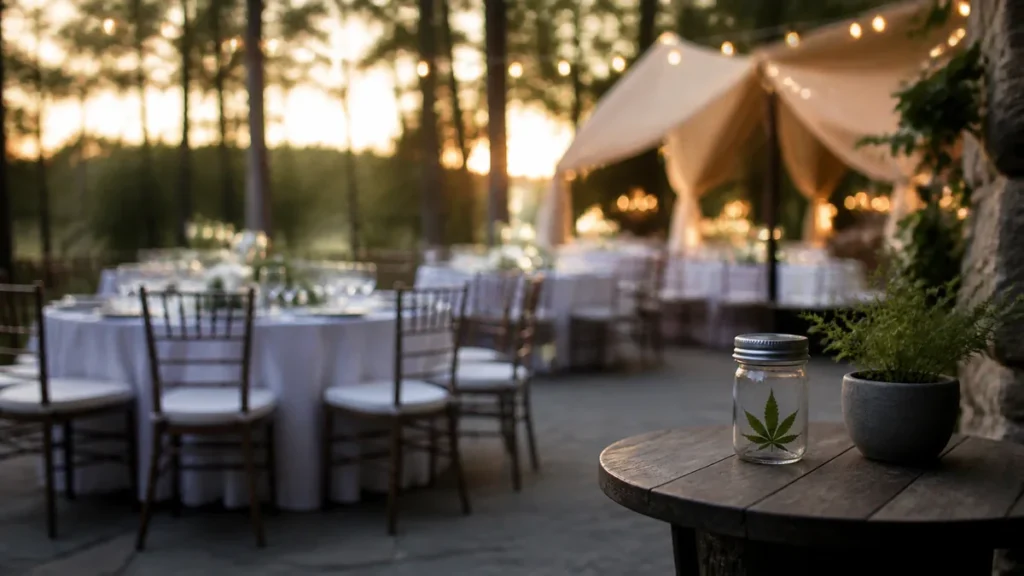
A cannabis-friendly wedding is not simply a matter of cannabis being legal in Canada. Your venue can set stricter conditions than the law, local rules can limit where smoking or vaping happens, and provincial and territorial rules control legal age, retail sales and public use. The practical question is not “can guests use cannabis?” but “what, if anything, can happen at this particular venue without disrupting the event or breaking a rule?”
For most couples, the lowest-friction option is to allow only lawful personal possession, state the venue policy clearly, and provide no cannabis service or favour. If you want to go further—such as allowing a designated outdoor consumption area or providing cannabis products—get the venue’s written approval first and check the law where the wedding takes place. This is planning guidance, not legal advice.
Start with the difference between legal, permitted and hosted
Federal law permits an adult to possess up to 30 grams of legal dried cannabis, or its equivalent, in public, and to share up to 30 grams with another adult. That does not create a right to use cannabis at a wedding venue, on a hotel patio, in a park or in a hired vehicle. It also does not override a municipality’s bylaw, a provincial rule or the venue contract.
Treat cannabis in three separate categories. First is a guest independently possessing a legal product. Second is consuming it on the property. Third is the couple, a vendor or another business supplying, displaying, selling or serving it. Each step introduces more rules and more reasons for a venue to say no. Do not promise a “cannabis-friendly” reception until the venue has defined what that means in writing.
A useful default is: guests may not smoke, vape or consume cannabis anywhere on site unless the venue has expressly approved a specific arrangement. That wording gives guests a clear expectation and avoids relying on an assumption that the usual cigarette area is automatically available for cannabis.
- Legal federally does not mean permitted by the property owner.
- A venue policy can be stricter than the provincial baseline.
- A cannabis retailer, supplier or service concept needs separate verification; it is not the same as guests bringing their own legal product.
- If the answer is unclear, plan the event as cannabis-free on site rather than improvising on the wedding day.
Ask the venue these questions before you sign
Put cannabis questions beside noise, candles, alcohol and décor in your venue review. An email is useful, but a signed contract or written addendum is better because the person selling you the date may not be the person enforcing the property rules on the day. If a venue says it is “fine outside,” ask exactly where, when and under what conditions.
Ask whether the rule differs for smoking, vaping, edibles, beverages and topical products. Ask whether a permitted outdoor location is actually away from doors, food service, guest seating, children’s areas and neighbouring property. If the wedding is at a hotel, golf course, winery, museum, park, community hall or rented home, also ask whether there are rules from the property manager, insurer, municipality or licence holder that take precedence.
Confirm enforcement in practical terms. Who speaks to a guest who ignores the rule? Can venue staff ask that guest to leave? Is there a fee, cleanup charge or risk to your deposit? Those answers belong in your day-of coordinator’s notes, not in a last-minute conversation at the bar. Use the same careful review you would for a broader venue agreement in the Wedding Venue Contract Checklist for Canadian Couples.
- Is any cannabis use allowed on the property?
- Which forms are allowed or prohibited: smoking, vaping, edibles, beverages or all forms?
- What precise outdoor area, hours and capacity apply?
- Does the rule change if alcohol is served or a liquor permit is in place?
- Who enforces the policy, and what contract consequences apply?
Choose the right level of cannabis involvement
A no-cannabis-on-site policy is usually the simplest route for an indoor venue, a family-heavy guest list, a wildfire-sensitive outdoor setting, a shared property or a venue with a strict smoking policy. It is also the easiest policy to communicate and enforce. Guests who use cannabis can make their own plans off site, subject to local law.
A limited personal-use arrangement can work when the venue has approved a specific outdoor place and the couple does not provide cannabis. Keep it discreet: no indoor use, no use near entrances or food, no designated “bar,” and no assumption that staff will supervise consumption. This approach is about accommodating adults, not making cannabis part of the reception programme.
A supplied or promoted cannabis experience is the highest-complexity option. It can involve sales and distribution rules, age verification, product sourcing, display and promotion restrictions, venue insurance, staff responsibilities and local consumption limits. Health Canada notes that provinces and territories set rules for sale, distribution, who may sell and where cannabis may be used publicly. Obtain province-specific guidance and written venue approval before committing money or promoting this element to guests.
- Lowest complexity: cannabis-free property.
- Moderate complexity: approved, limited personal use in a defined place.
- Highest complexity: products, favours, a cannabis service or vendor involvement.
- If the couple does not want to administer age checks, consumption rules and guest questions, choose one of the first two options.
Age, products and cannabis wedding favours
Never leave cannabis products on place settings, a welcome table or an unattended favour display. Even if all invited guests are adults, products can be picked up by a younger person, taken by the wrong guest or carried into an area where the venue prohibits them. Federal law prohibits giving or selling cannabis to youth, and legal retail products have mandatory packaging, health warnings and child-resistant features for good reason.
Legal age differs across Canada. Alberta’s legal age is 18, Quebec’s is 21, and it is 19 in most other provinces and territories. The law that matters is the law where the celebration happens, not the province where a guest lives. For a destination wedding, tell guests not to assume their home rules follow them.
If you are considering a cannabis favour, do not treat it like a cookie or a mini bottle of maple syrup. Confirm that the venue permits it to be brought onto and removed from the property, that every recipient is of legal age, and that the product is purchased from an authorized retailer in the wedding jurisdiction. A safer alternative is a non-cannabis favour that reflects the theme, while guests who choose cannabis obtain and use it independently and legally.
Do not use cannabis product names, brands or retailer branding in your invitation suite, signage or event promotion without checking the applicable promotion rules. Federal restrictions on cannabis promotion are broad and are particularly concerned with exposure to young people.
- Confirm the legal age where the wedding occurs.
- Use only legally sourced, properly packaged products if any are involved.
- Do not create unattended access or hand products to guests whose age you have not confirmed.
- Avoid homemade cannabis food or drink as a wedding favour or service item; it creates avoidable product, dosing and venue-policy uncertainty.
Smoking, vaping and edibles need different plans
Smoking and vaping affect more than the person using cannabis. They can conflict with smoke-free laws, a venue’s fire and air-quality policies, nearby guests, photographers, food service and an outdoor ceremony. A permitted tobacco area may still be unavailable for cannabis, so never infer permission from an ashtray or smoking sign.
Quebec is an important example of why province-aware planning matters: its government states that smoking or vaping cannabis is prohibited in places open to the public, indoors and outdoors, including public roads. In Ontario, provincial law also gives municipalities authority to regulate smoking cannabis in public places and workplaces, with the more restrictive rule prevailing if rules conflict. Check the local rule and the property rule, not just a general Canadian summary.
Edibles and beverages avoid smoke, but are not automatically easier for an event. They can be mistaken for ordinary food or drink, make it difficult for hosts to control access, and may take effect later than a guest expects. The practical planning standard is to keep all cannabis products clearly separate from catering, dessert tables, coffee stations and non-alcoholic beverage stations. Do not let a guest assume that a cannabis-infused item is ordinary food.
For outdoor weddings, also consider smoke sensitivity, children, wind direction, regional fire restrictions and neighbours. Your Canada Wedding Weather Contingency Plan can help you build alternatives for weather or smoke disruptions, but it does not replace venue permission.
- Never assume a tobacco area permits cannabis smoking or vaping.
- Keep cannabis products physically and visually separate from food and drinks.
- Do not designate an outdoor area until the venue confirms it complies with its rules and local requirements.
- Plan a respectful response if another guest is affected by smoke or vapour.
Alcohol, permits and service providers require extra caution
Keep cannabis planning separate from your alcohol plan. A liquor licence or special-event permit does not automatically authorize cannabis supply or consumption. In British Columbia, for example, the provincial government says a liquor Special Event Permit allows liquor service, but the permit holder may not supply cannabis to attendees or the public. British Columbia also allows an event permittee to prohibit smoking or vaping cannabis at the event.
If a venue has a bar or caterer, ask whether cannabis changes their liquor-service conditions, security plan or insurance requirements. Do not ask bartenders to hand out products, hold guests’ cannabis, advise on dose, or decide whether someone can safely leave. Those responsibilities can fall outside their contracted role and the venue’s policy.
A vendor describing itself as a cannabis service, lounge or “bud bar” is not proof that the concept is legal at your venue. Ask the vendor to explain its role in writing, who is legally supplying product, whether it is selling anything, how age screening works, what insurance it carries, and what written approval it has from the venue and relevant regulator. If those answers are vague, do not build the reception around the service.
If alcohol will be served, revisit the decision guidance in Open Bar vs. Cash Bar at a Canadian Wedding and the provincial licensing details in Can You Bring Your Own Alcohol to a Wedding Venue in Canada? Cannabis is a separate issue, but the combined impairment and transport plan should be one coordinated document.
- Do not combine cannabis distribution with your bar plan by assumption.
- Ask liquor permit holders and venues whether cannabis affects their conditions.
- Do not make bar staff responsible for cannabis products or guest impairment decisions.
- Require written documentation from any specialized service provider.
Tell guests clearly and plan the trip home
Use calm, practical wording on the wedding website, details card or pre-event email. Guests need to know whether cannabis is prohibited, whether any approved outdoor area exists, whether products will be supplied, and whether they should arrange their own transportation. A private message is often kinder than a public announcement if only one or two guests need a reminder.
Make participation optional and avoid language that pressures anyone to use cannabis. Include attractive non-alcoholic drinks, comfortable indoor and outdoor spaces, and activities that do not centre substances. This is considerate for guests who do not use cannabis, are pregnant, are in recovery, have health concerns, are attending with children or simply prefer not to be around smoke or vapour.
Your departure plan should cover anyone who may be impaired, whether by cannabis, alcohol or both. Put the final shuttle time, taxi or rideshare pickup point, designated-driver plan and nearby accommodation information where guests will see it before last call. If the venue is rural or rideshare availability is uncertain, a pre-booked shuttle or a hotel return loop can be more reliable than assuming on-demand rides will be available.
Sample guest wording: “Our venue does not permit cannabis use anywhere on the property. Please make alternate arrangements and do not bring cannabis into the reception.” If a venue has approved limited use, be equally specific: “Cannabis smoking and vaping are permitted only in the marked outdoor area from 8:00 to 10:00 p.m.; no cannabis may be used indoors, near food service or in parking areas.” Replace those details with the venue’s actual written conditions.
- State the rule before the wedding, not only on the day.
- Give the coordinator, venue lead and wedding party the same final policy.
- Make a safe ride home easy to understand and use.
- Address a problem quietly and promptly; do not turn it into a public confrontation.
Continue planning
- Wedding Venue Contract Checklist for Canadian Couples
- Canada Wedding Weather Contingency Plan
- Open Bar vs. Cash Bar at a Canadian Wedding
- Can You Bring Your Own Alcohol to a Wedding Venue in Canada?
Frequently asked questions
Can guests bring cannabis to a wedding in Canada?
They may be able to lawfully possess a legal product, but the venue can prohibit it and provincial, municipal and property rules can limit where it is used. Check the venue contract first; do not equate legal possession with permission to bring it onto the property.
Can we give cannabis as a wedding favour?
It is a high-risk choice. Confirm venue permission, legal age, authorized retail sourcing, safe handling and the provincial rules where the wedding occurs. Never leave products unattended or mixed with ordinary favours or food. A non-cannabis favour is the simpler option.
Can guests smoke cannabis in the venue’s smoking area?
Only if the venue specifically says so in writing and the area complies with applicable local rules. A tobacco smoking area does not automatically permit cannabis smoking or vaping.
Is the legal age for cannabis 19 everywhere in Canada?
No. Alberta’s legal age is 18 and Quebec’s is 21; it is 19 in most other provinces and territories. Apply the age requirement in the province or territory where the wedding takes place.
Can we have a cannabis bar at a wedding?
Do not assume so. A cannabis bar can trigger rules about who may sell or distribute cannabis, age verification, venue insurance, product display and local consumption. Obtain written venue approval and current province-specific regulatory guidance before booking or advertising it.
Does a liquor permit cover cannabis at a wedding?
No. Alcohol and cannabis operate under different rules. In British Columbia, a liquor Special Event Permit holder may not supply cannabis to attendees or the public. Ask your venue and provincial regulator how any liquor licence or permit affects the proposed arrangement.
Sources and verification notes
These sources were reviewed on August 13, 2026. Requirements, prices and availability can change; confirm time-sensitive details directly.
- Legalizing and strictly regulating cannabis: Youth and adults — Health Canada
- Authorized cannabis retailers in the provinces and territories — Health Canada
- Cannabis Act: public possession limits calculator — Health Canada
- Cannabis at a special event — Government of British Columbia
- Loi encadrant le cannabis — Gouvernement du Québec
- What You Need to Know About Cannabis at Weddings — Wedding Planners Institute of Canada
Recent Ratings
-

Olivia Marie Events

Ontario » Barrie ()
-

Tamea Burd Photography
British Columbia » Vancouver (Wedding Photography)
-

the barn 1906
Ontario » Bradford (Farm Weddings)
-

M2S Photography

Alberta » Edmonton (Wedding Photography)
-
The Club at North Halton
Ontario » Halton Hills (Wedding Banquet Halls)
-

Monolith Photo
Ontario » Mississauga (Wedding Photography)
-

Rebecca Elizabeth Louise Photography
Ontario » Ottawa (Wedding Photography)
-

Aneta Elizabeth Photography
Ontario » Newmarket (Wedding Photography)
Popular Listings
-

Bar U Ranch
579 viewsAlberta » Longview (Farm Weddings)
-

Il Barone Banquet & Conference Centre
700 viewsQuebec » Gatineau (Hotel Weddings)
-

Alice Li Alternations
329 viewsOntario » Markham (Wedding Dresses)
-

Sherry Smith Photography
538 viewsOntario » Brantford (Wedding Photography)
-

Stacey Foley Design
471 viewsAlberta » Cochrane (Wedding Planning)
-

Bearfoot Bistro
521 viewsBritish Columbia » Whistler (Restaurant Weddings)
-

Membertou Trade and Convention Centre
404 viewsNova Scotia » Membertou (Wedding Banquet Halls)
-

St Brigid’s Centre for the Arts
519 viewsOntario » Ottawa (Wedding Banquet Halls)